

Anticipating Tomorrow
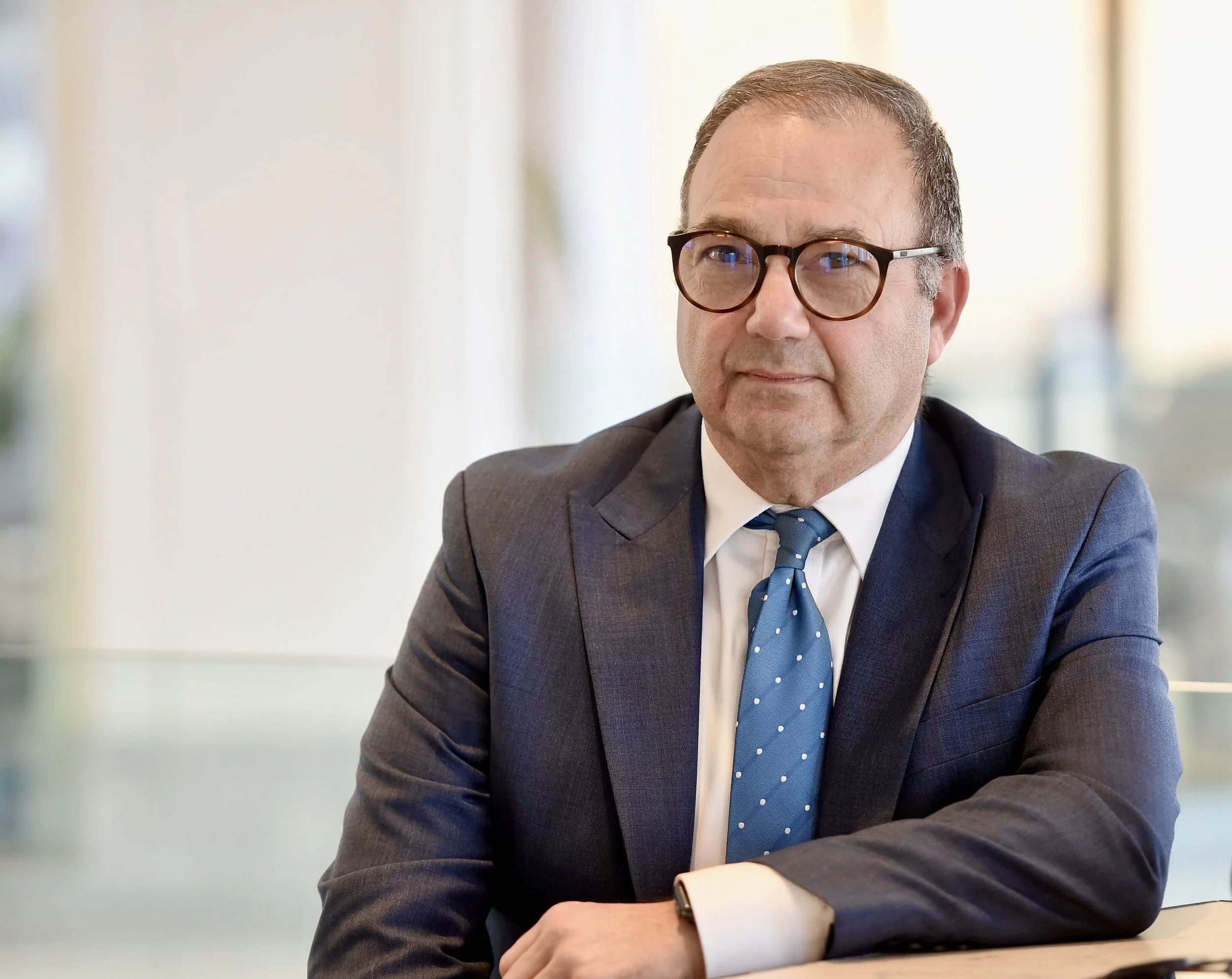
Dayna Camilleri Clarke sits down with Dr Silvio De Bono, the founder who built IDEA Group from a basement office into a diversified organisation spanning consulting, education and care, all driven by one belief: true leadership means anticipating tomorrow.

Two decades ago, the foundations of IDEA Group were laid in a modest basement office at its founder's home. Today, the organisation spans consulting, higher education and care services, serving businesses, professionals and communities both locally and internationally. For Dr Silvio De Bono, the philosophy behind that journey has always remained constant.
"Good leaders don't manage today. They manage tomorrow. They keep the horizon in mind."
Yet for Dr De Bono, the most important part of this journey is not the organisation's scale, but the purpose that has guided it since its earliest days. "I always wanted to do things differently," he says. "The idea was never just to build a business, but to create something that could contribute to society."
From a basement idea to a growing group
IDEA Group was founded in 2004 as a management consultancy firm, at a time when a handful of traditional players dominated Malta's consulting landscape. From the outset, Dr De Bono sought to distinguish the company through a more collaborative model. "We never presented ourselves as a know-it-all consultancy," he explains. "Our approach was always about partnering with clients. Together we identify challenges, and together we develop solutions."
Growth came sooner than expected. After months spent carefully planning and laying the foundations, the small consultancy began expanding rapidly, forcing the team to move into larger offices much earlier than anticipated. "It started in a basement, and I still treasure the time I spent there on my own thinking and trying to foresee the future," he recalls. "But eventually we had to move because the growth was happening faster than we imagined."
What followed was a series of defining milestones that would transform the organisation into a diversified group. Over time, IDEA expanded into digital services and education, and most recently into the care sector. Today, the group operates through three main pillars: consulting through IDEA Advisory, education through IDEA College, and specialised care services. While these divisions may appear distinct, Dr De Bono insists a single strategic vision binds them.
"At their core, all three pillars are about identifying gaps in society and helping to address them," he explains. "Whether we are advising businesses, educating professionals or providing care services, the objective is the same: creating opportunities and contributing to societal development."
Education as a catalyst for transformation
The most transformative moment in IDEA Group's evolution was the launch of its educational arm, now known as IDEA College. What began as leadership training programmes eventually grew into a fully-fledged private higher education institution offering qualifications ranging from certificates to doctoral programmes.
For Dr De Bono, however, the true impact of IDEA College lies not in academic credentials, but in the lives it has changed. "The development of IDEA Academy was one of the most meaningful parts of our journey," he says. "Not only as a business, but because it gave opportunities to people who believed their career had reached a dead end."
Many of the students who enrol are mid-career professionals juggling demanding jobs, family responsibilities and the desire to improve their prospects. Traditionally, pursuing tertiary education at this stage of life was difficult due to rigid academic pathways and entry requirements. IDEA College sought to change that.
"We created opportunities for people who could not pursue their dreams earlier in life," Dr De Bono explains. "Today, many professionals have returned to study, changed career paths or achieved promotions because of the education they received here."
During graduation ceremonies, he says, it is not uncommon for students to tell him that enrolling at the institution allowed them to fulfil a lifelong ambition. "Those are the moments that remind you why you started."
Leadership beyond the present
Central to Dr De Bono's philosophy is a concept he describes as anticipatory leadership. Over the past century, leadership theories have evolved from traditional management models to transformational and transactional approaches. For Dr De Bono, however, leadership ultimately comes down to foresight. "In my management teaching, I often speak about anticipatory leadership," he explains. "It is the idea that the leader today must define the organisation of tomorrow."
This perspective emphasises the distinction between management and leadership. "Managing people focuses on today," he says. "Leadership focuses on tomorrow. When you lead properly, you prepare the organisation for the future so that tomorrow you can manage the day after."
It is a philosophy that has shaped IDEA Group's approach to navigating change, from technological shifts in education to emerging opportunities in sectors such as healthcare and digital innovation.
At the heart of this approach lies a set of personal values that Dr De Bono considers non-negotiable: honesty, transparency and commitment. "When I recruit people, I do not necessarily look for those with the best degrees," he says. "What I look for are individuals who are honest, who challenge me, and who are fully committed to what they do." He is particularly wary of surrounding himself with individuals who simply echo his views. "I do not want to be surrounded by yes-men," he says firmly. "Anyone who agrees simply because I have asked something to be done does not belong in the organisation."
The challenge of people management
If leadership is about anticipating the future, people management remains one of its most complex dimensions. For Dr De Bono, the greatest challenge is not hiring talent but building an environment where individuals feel empowered to speak openly and think independently. "In many organisations, and particularly in closed societies, people sometimes hold back because they worry about what others will think," he says.
Encouraging authenticity and critical thinking is therefore essential. "One of the biggest challenges today is motivating people to express what they truly believe rather than what they think others want to hear." By promoting an open management culture, he believes organisations can unlock greater innovation and stronger collaboration. "The last thing I want is people who are an extension of myself. I want people who bring their own perspectives and ideas."
A shifting economic landscape
Beyond the internal dynamics of leadership, Dr De Bono closely observes the broader economic and societal trends shaping Malta and the global economy. One of the most pressing issues, he believes, is the need to strengthen skills development. "Education systems must place greater emphasis not only on academic subjects but also on numeracy, financial literacy and values," he says. Without strong personal values, he warns, professionals risk losing direction. "Competence alone is not enough. If individuals lack personal values, they can easily lose focus, vision and the right attitude."
At a national level, he believes governments must also exercise greater discipline in economic planning. "Many countries have lived beyond their means," he says. "Profit has sometimes been prioritised over the well-being of people." At the same time, global challenges such as climate change are increasingly shaping economic decision-making.
"Global warming will have a significant impact on national economies and individuals alike," he notes. For businesses, this means adapting strategies to navigate both economic uncertainty and societal transformation.
The future of care
One area where these shifts are particularly visible is the care sector. Like many European countries, Malta is experiencing demographic changes that are placing increased pressure on healthcare and social services. Ageing populations and workforce shortages are creating new challenges for policymakers and providers alike.
Through its care initiatives, IDEA Group seeks to address some of these gaps by developing services focused on rehabilitation, respite care, senior wellness, and support for persons with disabilities. For Dr De Bono, the motivation is not purely commercial. "In the healthcare sector, we are not simply building a business," he says. "We are creating opportunities while filling a real gap in society."
Private operators, he believes, can play an important role in supporting national systems, provided they operate responsibly and with the right values. "The focus must always remain on quality, sustainability and the well-being of the individuals we serve."
Competing through vision
Despite operating in increasingly competitive sectors, Dr De Bono believes long-term success depends less on imitation and more on understanding local contexts. "What works in one place does not necessarily work in another," he explains.
Businesses must therefore invest time in studying markets, identifying emerging needs and forming partnerships with organisations that share similar values. "Hard work, perseverance and commitment are essential," he says. "But equally important is the ability to anticipate what others may not yet see."
Even after years of leadership experience, uncertainty remains part of the process. "I still have doubts," he admits. "But having doubts is part of success. Making decisions in uncertain situations is part of the journey." Academic training, he adds, helped him move away from emotional decision-making towards a more rational approach to strategy and leadership.
Dream big, start small
Looking ahead, Dr De Bono believes the next chapter for IDEA Group will involve continued growth across its three pillars, while maintaining the values that have guided the organisation since its earliest days.
"The future is bright," he says. "We will continue expanding not only our services but also the opportunities we provide to students, professionals and communities." Yet even as the organisation evolves, the fundamental lessons of entrepreneurship remain unchanged. His advice to aspiring leaders is simple. "Be ready to fail, but never give up," he says. And while ambition is essential, it must be grounded in reality.
"Do not just think big. Dream big, but start working within your own environment," he adds. "If you try to swim in the ocean when you can barely swim, you risk drowning."
For Dr Silvio De Bono, the lesson is clear: leadership is not about managing what exists today, but about building what will exist tomorrow. And for those willing to keep their eyes on the horizon, the possibilities are limitless.




As Malta's property market matures, Zanzi's Steve and Michael Mercieca discuss technology, trust, governance and why the next decade will favour disciplined operators over growth-at-all-costs ambition.