

Numbers, trust, and the next bet
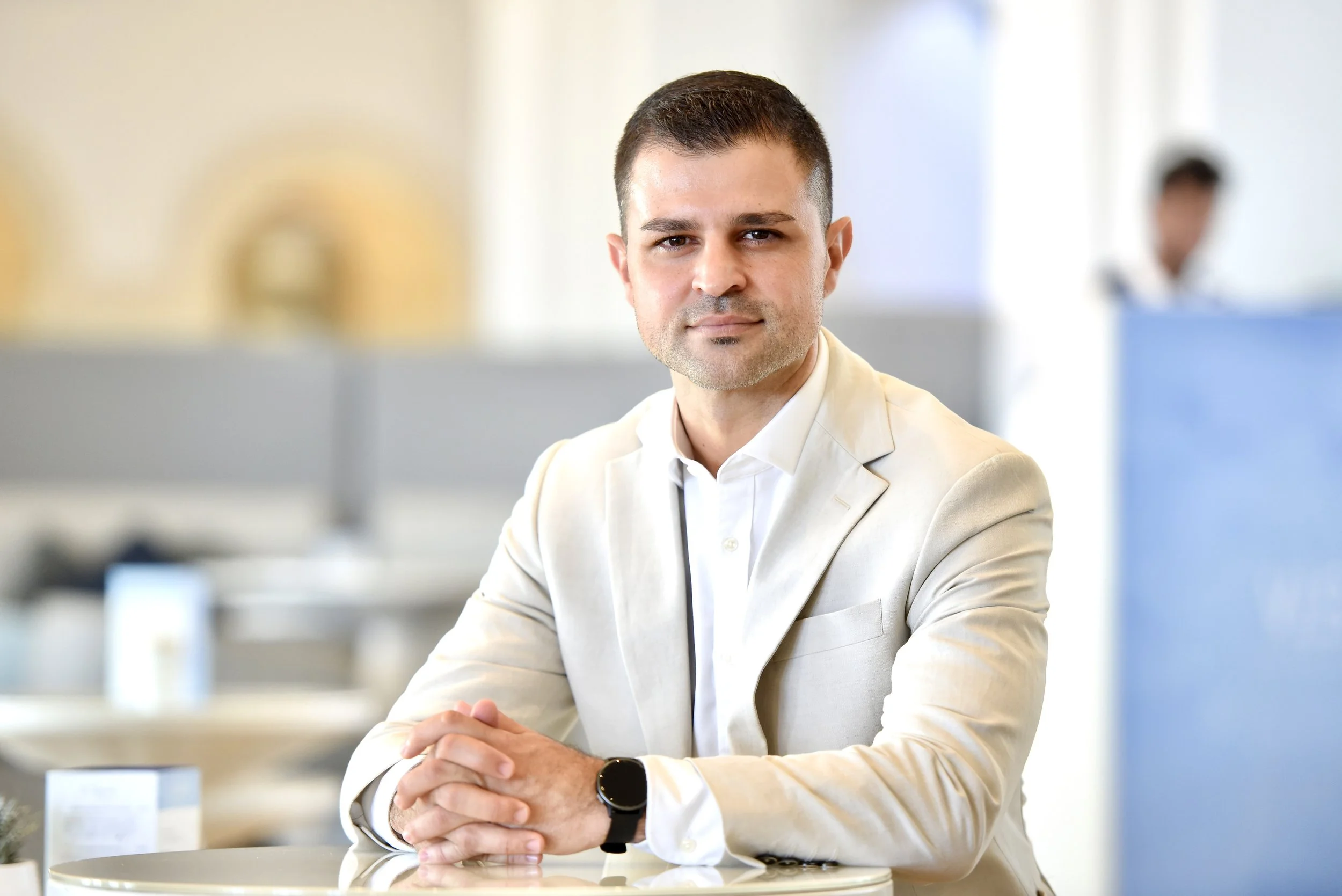
In his first 100 days as CFO, Roderick Attard has focused on understanding, stabilising and aligning—pairing capital discipline with data-driven oversight. From refurbishing casinos to modernising BI and ERP, he frames finance as a trust engine: agile balance sheets, clear KPIs, and compliance embedded in culture—not tacked on—for growth, sustainably.
You've stepped into the CFO role at Tumas Gaming after senior finance roles in iGaming and audit. What are your first 100-day priorities, and how are you structuring the handover and cadence with the executive team?
During my first 100 days, my focus has been threefold: understanding, stabilising, and aligning.
The first step was to dive into the operational and regulatory context of both the land-based and the online businesses. I sat down individually with executive and middle management to understand, from their point of view, our services, challenges, compliance and processes in general. My ultimate goal was simple: understand the revenue drivers and cost pressures.
Secondly, I assessed the finance organisation, covering aspects from team structure to control environment, and from data processing to reporting cadence. The ultimate goal here was to ensure we, as the Finance Department, provide internal and external stakeholders with complete, accurate and timely insights. It's not about presenting financial figures in a nicely presented financial report. It's about telling the story behind the figures.
The third focus area is more future-looking: alignment with the executive management team on strategic priorities and direction. I describe myself as a structured person, always seeking ideas to turn into actionable plans. That's why I, along with the rest of the executive team, have established weekly meetings to discuss current performance, measure our progress against our original plan, and remain flexible to adjust for any new knowledge we learn along the way.
Tumas Gaming operates in a tightly regulated market with both land-based and digital dynamics. What's your capital-allocation framework across maintenance capex, growth projects, and tech/analytics—especially where returns and regulatory timelines intersect?
The timing of this question is perfect as Tumas Gaming is currently investing significant capital to refurbish its casinos. The Company's capital strategy must navigate two aspects: the physical infrastructure of our casinos and the agile, fast-evolving digital side of gaming. Our capital-allocation framework is rooted in disciplined prioritisation: every Euro must earn its keep. Maintenance capex gets first call in the short-term, ensuring that compliance and player entertainment experience remain top priority.
Capex to fuel strategic growth is equally important as it ensures we stay aligned with technological development and are relevant to players' expectations in the long run. Growth projects are evaluated through a dual test: return on investment (ROI) and regulatory feasibility. In gaming, one can't separate the two – a great ROI on paper is meaningless if licensing or regulatory timelines push it out by two years.
Growth projects go beyond the casinos' physical assets. Investments in data and technology are essential to enable better data gathering and analytics. In fact, we're not just refurbishing the look and feel of our casinos; we are upgrading our technological platform to improve operational efficiency and enhance players' insights (from analytics to responsible-gaming tools).
Ultimately, capital allocation is about balance: protecting core operations while funding innovation that strengthens our long-term licence to operate.
With interest rates still elevated, how are you thinking about balance-sheet resilience—debt mix, refinancing windows, and liquidity buffers—at the gaming-subsidiary level versus the wider group? What stress tests are you running?
Interest rates in Malta have remained relatively stable over the past decade. This is good news for us during times when we're going through significant investments. At the subsidiary level, as CFO, my goal is to maintain an agile balance sheet that can absorb financial cost volatility without constraining future growth. Being part of a well-established local group gives Tumas Gaming easier access to both fixed and floating debt options, thus allowing me to optimise the overall debt mix and maturity profile. Moreover, casinos have high cash conversion rates, though somewhat seasonal. Therefore, obtaining flexibility in financing structures, via, for example, a revolving facility, can help in optimising the use of cash reserves while minimising borrowing costs.
Stress testing helps us identify and address any weak areas by simulating different scenarios, such as a dip in players/visits, a change in gaming taxes or a sudden increase in interest rates.

The goal is to build confidence – for shareholders, lenders, regulators and our organisation. A healthy balance sheet gives us room to act strategically, whether that's investing in new technology, minimising borrowing costs or absorbing short-term market turbulence.
Accountability and transparency are central to gaming. Which KPIs and reporting rhythms (monthly dashboards, risk heat-maps, audit-committee deep dives) will you use to strengthen performance management, compliance, and player-protection oversight?
Accountability is non-negotiable in gaming – encompassing not just financial accountability, but also operational and ethical considerations. I personally believe in clarity over complexity when it comes to KPIs. For daily performance management, we focus on a concise dashboard combining financial metrics (e.g. Gross Gaming Revenue volatility) with operational indicators (e.g. number of new and recurring players). This helps us gauge daily performance and take swift action, if needed. The latest technological platform will keep improving on existing dashboards by adding a third yet equally important pillar: compliance indicators (such as player-safety metrics).
Our reporting rhythm will follow a tiered approach: daily operating snapshots, monthly management reports, and quarterly deep dives with the audit committee. This set-up helps to put compliance and player protection as part of our performance culture, rather than treating them as afterthoughts. We're also developing risk heat maps that integrate all departments, providing the board with a comprehensive view.
Transparency isn't about producing more reports; it's about telling the story behind figures and KPIs that drive better decisions and uphold trust with players and regulators alike.
You moved from Head of Finance to CFO at Acroud. Which lessons from a fast-moving affiliate/media business—working-capital discipline, revenue quality, data governance—are you bringing to Tumas Gaming?
At Acroud, I was exposed to a variety of projects, including building an internal Business Intelligence system, switching stock exchanges, multiple acquisitions and growth initiatives, and refinancing a EUR20 Million+ bond. I was also lucky enough to have been coached and mentored by a great CFO. Amongst many things, he taught me that a CFO in general is much more than day-to-day book-keeping, internal controls, accurate reporting and other deliverables one would expect from a traditional finance function. A CFO needs to monitor the underlying operational trends, maintain a light and healthy balance sheet, strengthen the corporate governance structure, and remain focused on the Company's bigger picture and long-term sustainability. That mindset (combining operational insight with financial discipline and strong governance) is what I'm bringing to Tumas Gaming.
Where do you see the most significant upside from finance digitisation—ERP consolidation, near-real-time BI, AI-assisted forecasting—and how will you balance speed of implementation with cyber, AML, and responsible-gaming controls?
In today's digital age, collecting the correct data and knowing how to transform it into value-adding information can give any market participant a substantial competitive advantage. ERP systems help gather data from across all departments at all points throughout the product life-cycle. Business Intelligence and Artificial Intelligence can help in analysing the data gathered and transform it into meaningful information. The most significant upside of integrating BI and AI with ERP systems would be unlocking a 360-degree overview of the business in near-real time, thus enabling management to make better decisions, act faster, and support compliance automation.
"It's not about pretty reports—it's the story behind the figures."
Personally, I like data. What excites me the most is the use of historical micro- and macro-data to compile forecasting trends and predictive analytics. For example, AI-assisted forecasting can help us anticipate seasonality or optimise staffing costs. In my view, this should not replace management's intuition but rather add another perspective and tool at management's disposal.
Of course, regulatory compliance and data security remain key. Gaming operates under strict AML, GDPR, and responsible-gaming frameworks. Enhanced cybersecurity protocols and data-access governance will accompany every digital upgrade. True finance transformation is not about perfectly-presented dashboards – it's about creating trust in every number and every process.
Finally, what does success look like by this time next year—for shareholders, lenders, regulators, and employees—and which two or three metrics should they judge your tenure on (e.g., ROCE, cash conversion, compliance findings, engagement)?
Success represents different things to different stakeholders. To me, success means stability, credibility, and momentum. For shareholders, this is reflected in improved ROI and cash conversion, demonstrating that we're investing smartly and managing costs without compromising growth. For lenders, it's a clear and resilient balance-sheet structure. For regulators, zero material compliance findings. And for employees, it's engagement — knowing finance supports their decisions rather than policing them.
I would like to be evaluated based on three key metrics—first, cash conversion and working-capital efficiency, which demonstrate operational discipline. Second, the return on capital reflects the effectiveness of investment choices made. Lastly, audit and compliance outcomes are essential, as they showcase the integrity of execution. These criteria will provide a comprehensive framework for assessing performance.
The CFO's role in gaming extends beyond financial management; it also involves risk management and driving growth. My goal is for finance to remain a proactive partner, enabling innovation and growth while safeguarding trust.















As Malta's property market matures, Zanzi's Steve and Michael Mercieca discuss technology, trust, governance and why the next decade will favour disciplined operators over growth-at-all-costs ambition.