

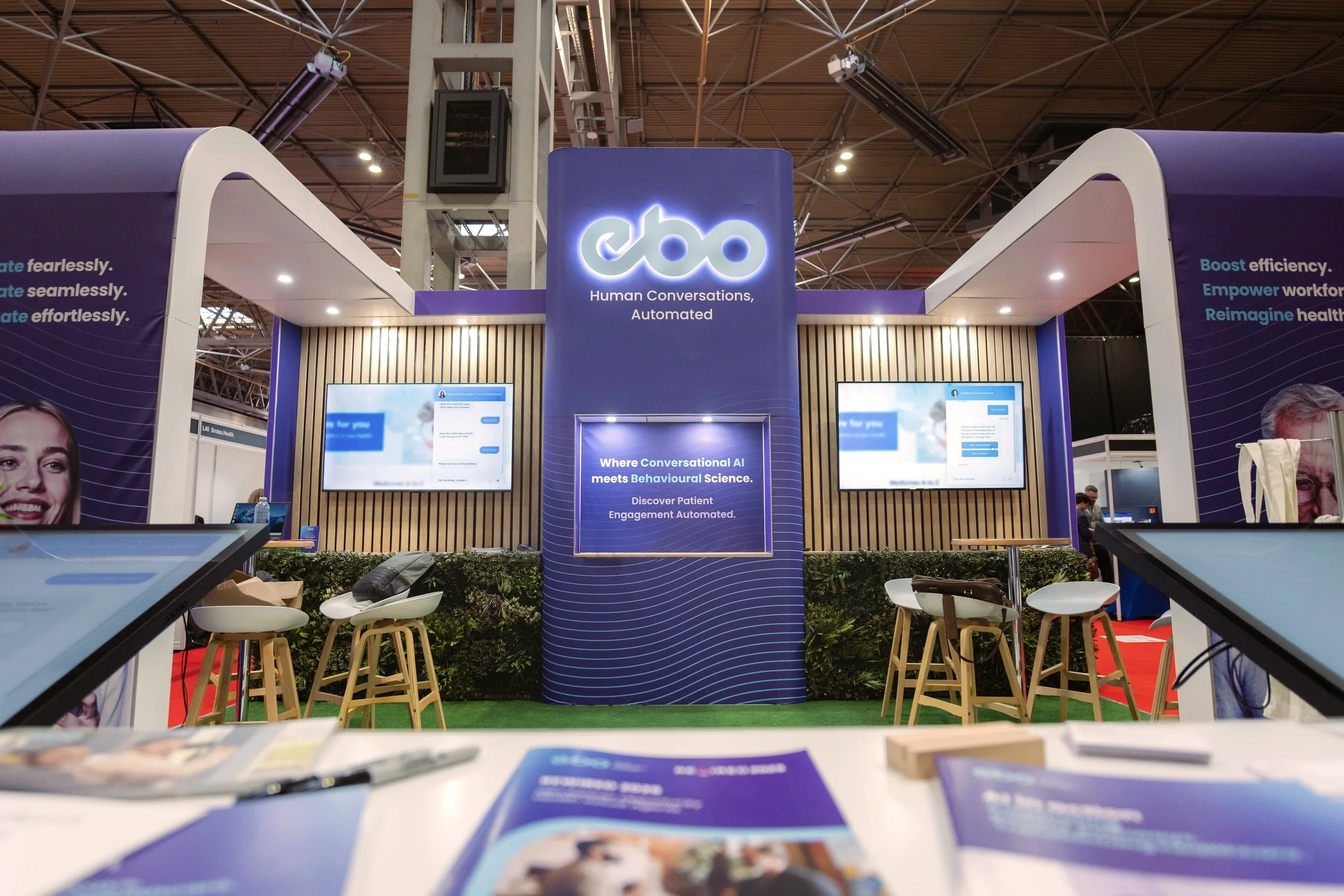
EBO Rewired
From transforming patient access in healthcare to redefining customer engagement in banking and insurance, Malta-founded AI company EBO is building an international presence around technology that delivers measurable results. Following Olea Venture Partners' ("Olea") recent investment in the business, EBO's Founder and CEO, Dr Gege Gatt, and Olea's Founding and Managing Partner, Dr Harietta Eleftherochorinou, discuss what this means for the industry and EBO's ambitions for the next phase of growth.
Healthcare and financial services place high demands on Artificial Intelligence. Success depends on more than technical capability: the technology must integrate with complex systems, support demanding workflows, protect sensitive information and earn users' trust. EBO has built its approach around these exact requirements. It combines AI-powered engagement with workflow automation to help organisations improve access to services and free up team capacity.
With its recent transition to PLC, the establishment of a subsidiary in Greece, and an investment from Olea, EBO is entering an exciting new chapter. Gatt and Eleftherochorinou speak to MONEY about the results underpinning EBO's growth, the significance of the investment and what comes next.
Gege, how would you describe EBO to someone encountering the company for the first time?
EBO is a pioneer in scalable, AI-driven engagement solutions for healthcare and financial services. We combine Conversational and Generative AI with workflow automation to help organisations engage with patients and customers in a meaningful, effective and human way. Built for regulated environments where trust and reliability are essential, our multilingual platform connects natural, two-way conversations with the processes behind them, easing workloads, increasing capacity, improving user experiences and reducing operational costs.
Our mission is to make engagement with these services effortless, inclusive and human. We believe better access begins with removing friction. Grounded in behavioural science and shaped by service teams and user feedback, our solutions create intuitive, conversational entry points that reduce barriers related to language, literacy, digital confidence and anxiety. Multilingual dialogue, sentiment analysis and synthetic voice capabilities support this inclusive approach, helping more people access services.
Access is the starting point; meaningful action is the goal. Through human-centred conversations, we help people feel heard, understood and motivated to take the next step in their healthcare or financial journey. Connecting those conversations with intelligent automation enables organisations to deliver services safely and efficiently, while freeing staff to focus on the people who need them.
Backed by Microsoft and powered by a world-class team of data scientists, conversation designers and software engineers, we build on deep customer insight to deliver practical, measurable improvements, without leaving anyone behind.
Harietta, you described EBO as "defined by proof". What stands behind that statement?

Olea's Founding and Managing Partner Dr Harietta Eleftherochorinou
EBO is already delivering measurable impact in some of the most complex healthcare environments. The company has 24 live deployments across UK National Health Service (NHS) Trusts and hospitals, with patient adoption rates of up to 97%, significant operational capacity released for hospital teams, and customer Return on Investment (ROI) up to five times higher.
Gege and the EBO team have shown that they can do what remains difficult in healthcare AI: move from promising technology to trusted, repeatable deployment in real health systems. They can navigate complex integrations, meet healthcare systems' governance and safety standards, and get the technology adopted in day-to-day clinical and operational workflows. That evidence underpins our confidence in EBO's next phase.
Gege, what does the investment represent for EBO?
For us, it represents more than capital. It is a vote of confidence in EBO and in the scale of the opportunity ahead. With Olea, we have a partner who understands that innovation succeeds through trust, evidence and disciplined execution.
The investment will help us accelerate adoption across health systems, expand into new clinical and operational workflows, and support further growth across Europe and into the United States. It gives us support to take what we have established to more healthcare organisations. Our wider business continues to serve financial services, while this investment specifically strengthens the next stage of our healthcare growth.
Harietta, what will your involvement bring to that next stage?
Olea will support the EBO team as it deepens adoption across the UK, strengthens its Southeast European presence, and enters the United States with a particular focus on health-system partnerships, commercial strategy and building a repeatable model for international expansion.
Gege, EBO recently became a p.l.c. and established a subsidiary in Greece. How do these developments fit into your growth story?

EBO's Founder and CEO Dr Gege Gatt
We have further milestones ahead as we expand internationally. EBO Greece is not just an additional office. It serves as a hub for building a South-Eastern Mediterranean cluster of excellence in AI. It connects our work across Greece, Italy, Cyprus and Malta with our established research and development capabilities in the UK and our growing presence in North America.
For us, international growth involves strengthening the connections between research, technology development and deployment. This presence provides a framework for bringing those activities closer across our footprint. As EBO expands, we want to carry forward the strengths behind our existing results and build a repeatable approach that remains responsive to each healthcare and financial services environment.
Gege, what makes EBO's approach distinctive in a crowded AI market?
EBO bring together secure AI, meaningful dialogue and integration with the systems that deliver services. We build AI with clear safeguards, designed to operate as part of the infrastructure within regulated environments. Integration, governance, safety, accessibility and human oversight are central to that approach.
A conversation is only useful if it connects people with the service they need. We look at the whole journey: the initial interaction, the underlying processes it triggers and the outcome it delivers. By bringing engagement and workflow automation together, we help organisations improve the experience for patients and customers while freeing capacity for their teams.
Behavioural science also shapes how our technology communicates. We want people to feel understood and confident using it, so we enable natural, two-way dialogue that adapts to their reading age. With an intuitive interface, access across devices and support for more than 100 languages, we make services easier to navigate and understand.
Another key strength is integration. In healthcare, for example, EBO connects with major national systems, such as the UK NHS App, and a range of Electronic Patient Record systems, enabling information to flow between systems and helping patients and staff complete tasks more easily.
Ultimately, what sets EBO apart is the measurable impact we deliver. Across healthcare and financial services, we have automated more than 75% of incoming user interactions. Within our UK NHS deployments, we have reduced missed appointments by up to 30%, helping hospitals save time and money. Process automation, including AI-driven conversational forms, has saved up to 50% of clinicians' time, while our solutions have achieved 94% patient satisfaction. By making routine interactions simpler, immediate, and automated, EBO frees up thousands of clinical and administrative hours each year, allowing staff to focus on patient care. These outcomes demonstrate the value of connecting accessible, responsive engagement with the operational workflows behind it.
Gege, how will EBO preserve the strengths behind its current results as it expands?
Expansion should never mean simply applying more technology to more organisations. If the underlying process is poor, AI can simply help you perform a poor process faster.
Our approach starts with the human journey. We start with the friction, the unmet need, and the outcome we are trying to improve, then redesign the process around it. AI enables better service, not the objective itself.
That principle also shapes how we build. Human oversight, interpretability, explainability and alignment with frameworks such as the EU AI Act are fundamental because trust is what allows AI to move from experimentation into real services.
As EBO grows, the discipline we want to preserve is simple: understand the problem deeply, redesign the journey intelligently, and use AI to scale the better system.
Gege, finally, what is your ambition for EBO's next chapter?
To extend the impact of a business. Across healthcare and financial services, our purpose remains improving access, engagement and operational capacity through AI that people and organisations can trust. I believe AI should ultimately be a tool for social good, using technology not simply to make organisations more efficient, but to make essential services more accessible, responsive, and human. That reflects the broader principle that technology should amplify human potential and serve societal good.
We want to help more organisations turn AI ambition into measurable improvements in everyday services. Growth matters because it allows us to bring that value to more people and more markets.
The investment gives us support to pursue that ambition, develop the platform further and broaden adoption. We'll measure progress by the difference EBO makes in real healthcare services.
To find out more about EBO visit ebo.ai.













AI promises faster development, lower costs and greater efficiency. But what happens when businesses invest in speed without the governance to control it? Malta-based Cleverbit Software examines the hidden costs of AI adoption and why, for financial services, fintech and iGaming businesses, faster code does not necessarily mean better results.