

Europeans have trillions sitting in bank accounts. Brussels wants more of it invested instead. Vanessa Macdonald asks what that could mean for Maltese savers.

Vanessa had every intention of retiring, but so far, she has been caught up in exciting freelance projects and voluntary work.
Hurrah! The Maltese had the third-highest savings rate in the EU in 2024, standing at 18.8%. Ah, hang on, perhaps not such a cause for celebration, it seems.
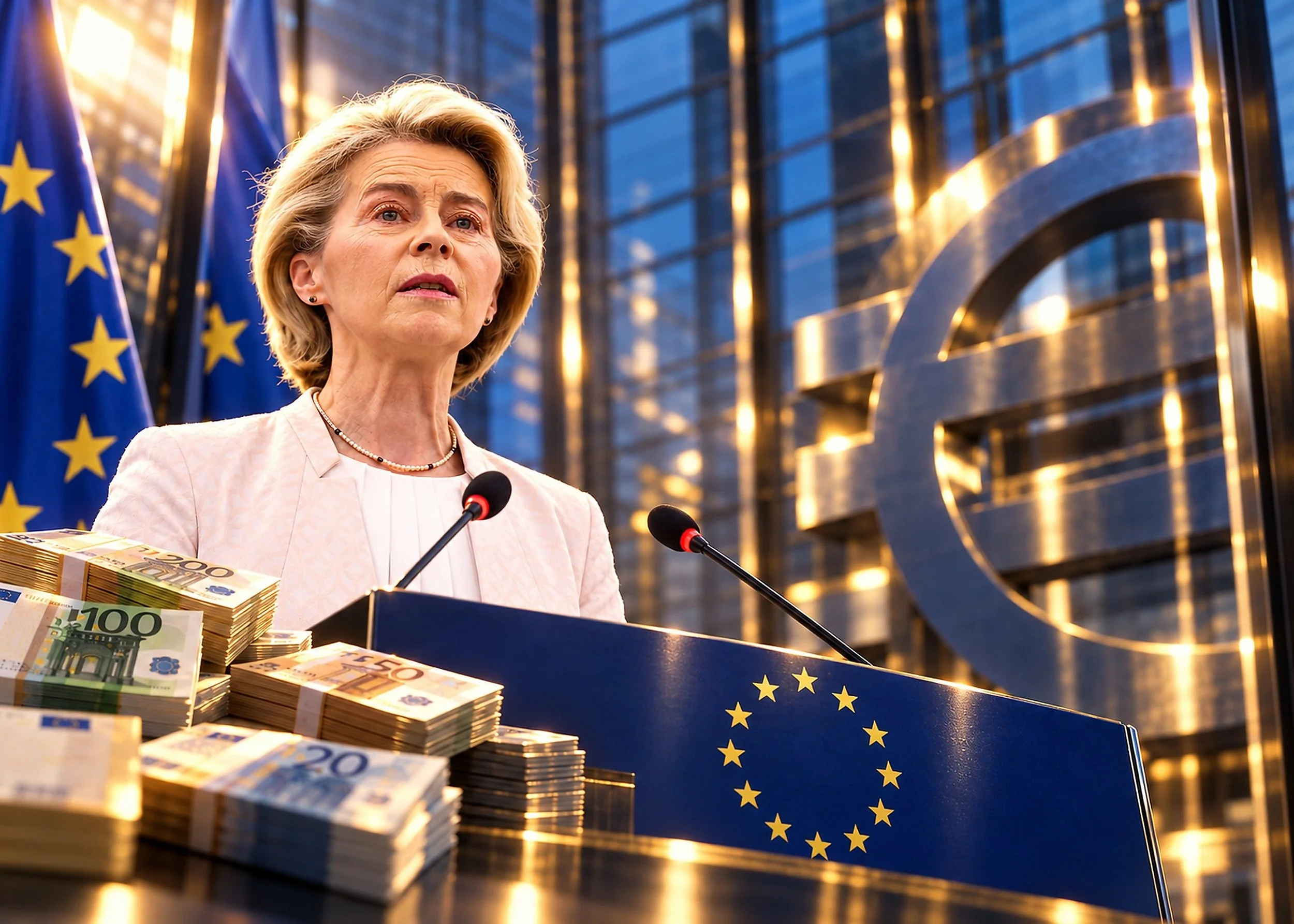
The Maltese may be prudent, or perhaps even wealthy, but one point often gets overlooked: savings and investments are different. The former might make it easier for households to prepare for a possible rainy day. Still, investments not only offer potential growth for that 'spare money' but also finance companies. This is why European Union President Ursula von der Leyen recently said that the EU needed a strategy to channel spare money "to the service of European companies".
A few numbers show where Maltese households keep their money: currency and bank deposits represent 40% of GDP, compared with 26.9% in the EU, while they hold only 8.9% in bonds (EU 2.4%).
The Maltese situation is only part of the bigger picture: one of the most-quoted statistics is that as much as €10 trillion of EU citizens' money sits in bank accounts, much of it outside the EU.
A recent study by payment company Revolut was particularly damning: it found €6.3 trillion was in low-yield deposits across 20 EU countries, often not even keeping up with inflation in 12 of those. And the reason for that is quite simply inertia… It is easier to leave money where it is than to look for somewhere better to put it.
Von der Leyen's statement needs historical context. The free movement of capital was, after all, one of the main pillars on which the EU was built. Still, the idea of setting up a Capital Markets Union, originally put forward in 2015, was beset by foot-dragging for way too long. That concept has now been replaced by the Savings and Investments Union (SIU), launched in March 2025, which puts the emphasis back on households' money, its role in enterprise financing, and, by extension, the broader EU competitiveness picture.
Von der Leyen's language, such as calling the unused money 'lazy', triggered considerable negative reactions. Still, some of these were prompted by agendas that (sometimes deliberately) do not see the bigger picture. For example, the EU is creating opportunities through a more efficient framework, but it is not mandatory, and citizens can do with their money as they please.
What is that framework? The intention is to encourage behaviour change among those who currently put money into what are being described as "stagnant bank deposits", creating a stronger domestic market that can compete more effectively against global options, primarily US equities and bonds.
Malta's Permanent Representative to the EU, Ambassador Neil Kerr noted in a recent contribution to FinanceMalta that cash and deposits in the EU represented roughly one third of households' total financial assets, compared with around one tenth in the United States.
The timing is no coincidence. Europe faces enormous new investment demands at precisely the moment public finances are already under pressure. Alongside the green and digital transitions, defence spending has moved sharply up the agenda, while Europe is also trying to close its productivity and technology gap with the United States and China. The European Commission has explicitly linked faster progress on the Savings and Investments Union to mobilising private capital for these priorities, including defence, rather than relying on governments alone. In other words, Europe has no shortage of savings; the challenge is persuading households to put more of that money to work in the European economy.
The EU has long fought its declining competitiveness and has now homed in on three areas that require investment: defence (a new challenge), green energy and innovation. The 2024 Draghi report identified the annual funding gap as between €750 billion and €800 billion; that amount has risen considerably and is now estimated at around €1.2 trillion.
The new framework, meant to be in place by the end of 2026, could mobilise up to €470 billion of that, not an insignificant proportion. How? It would look at ways to make investment more seamless, while adding fiscal and regulatory carrots. It would largely leave member states to choose the tools best suited to their specific needs. This includes the pensions markets, complementing simpler and more accessible accounts.
Meeting this deadline means advancing legislative proposals, including the securitisation package and the Market Integration and Supervision Package.
European Commissioner for Financial Services and the Savings and Investments Union, Maria Luís Albuquerque, recently told FinanceMalta that the SIU represents a "more holistic approach" which would target citizens' wealth and financial security as a core objective alongside competitiveness, "rather than treating market integration mainly as a technical objective".
"The interests of citizens and businesses are closely interconnected. Mobilising more household savings into productive investment would broaden financing options for European companies beyond traditional bank lending, while supporting growth, innovation and competitiveness across the EU. At the same time, it would give citizens more opportunities to earn better returns on their savings and strengthen their financial security, including in retirement," she said.
What would this mean for companies? It could mean less reliance on bank lending thanks to more access to equity and risk capital for start-ups, SMEs and other innovative companies.
Where does Malta stand? At the end of 2025, Maltese households held about €19.8 billion in bank deposits, according to monetary statistics.
Stockbroker and analyst David Curmi recently wrote that market capitalisation at the Malta Stock Exchange had reached €3.5 billion so far this year, while noting that bank deposits were also rising each year. The MSE has some 75,000 active accounts, most of which invest in the 90 bonds rather than equities.
"The emergence of the local corporate bond market as both a home for investors' savings and as an alternative financing for companies is a positive development," he said, adding various caveats.
The current low rate of private pensions in Malta could also be tackled, for example, by introducing government-led auto-enrolment. Another area that the SIU would certainly draw attention to is the venture capital and private equity ecosystem. Take venture capital: between 2022 and 2024, this was 12 times below the EU average.
The SIU will look to scale up this market and encourage greater participation by institutional investors, with proposals to reform the rules governing venture and growth capital funds by 2027.
Kerr summarised the key issue: "For Malta, [it] is not whether households save, but whether the financial system will be able to offer simple, trusted, cost-effective, and well-explained routes through which part of those savings can be invested over the long term."
The SIU could encourage everything from retail investment products and asset management to FinTech and tokenisation. Still, Kerr stressed that these had to be supported by the principle of proportionality coupled with the sovereignty of Member States when it came to fiscal measures, for example.
Stepping back from the local issues raises another question: what does all this mean for traditional banks? Will they be the ultimate losers if their business model is challenged? The European Central Bank has also weighed in on the implications, with interesting comments from Eurogroup President Kyriakos Pierrakakis.
"For many years, our priority was to build a banking system that was strong, stable and resilient. We have achieved that. Today, Europe faces a different challenge: ensuring that its financial system becomes a driver of competitiveness and long-term growth," he was quoted as saying, adding that the SIU and "a competitive banking sector are two sides of the same coin".
"Europe's banks remain the backbone of financing for our economy. If we want the SIU to succeed, we need banks that can operate on a truly European scale, support businesses wherever they are in the Single Market and channel capital efficiently towards Europe's strategic priorities."
This will mean making cross-border banking the rule rather than the exception, for example. It will also simplify procedures: "By reducing unnecessary administrative burden and making prudential and resolution frameworks more coherent, we can allow banks to focus on what they do best: financing households, entrepreneurs and businesses, rather than navigating avoidable complexity."
He spelt out some of the challenges – weaker productivity, intensifying global competition, geopolitical fragmentation, higher investment needs and a rapidly changing security environment – all of which could only be tackled by coordinated action.
"Ultimately, this is about much more than the banking sector. It is about Europe's future. Europe does not lack talent. It does not lack ambition. And it certainly does not lack savings. What has been missing is our ability to connect those savings with the investment opportunities that will define Europe's next chapter. Closing that gap is one of the most important economic challenges we face," he said.
The bottom line is that banks still provide around 70% of financing to the European economy and the SIU will complement rather than disrupt this sector.
He had an important point to make, though: "Trust does not come from the number of rules we have. It comes from the quality of the framework, the strength of supervision and the confidence that risks are properly understood and managed. Europe does not have to choose between resilience and competitiveness. By making its banking framework simpler, more transparent and proportionate, it can strengthen both, while preserving the high standards that underpin financial stability."

















Regulations are usually seen as a costly burden on business. But what if following the rules could actually improve your bottom line? Stephen Mallia explores how European product safety standards, certification and regulatory compliance can become powerful commercial advantages, helping businesses reduce risk, protect margins, build customer trust and gain an edge over competitors.