

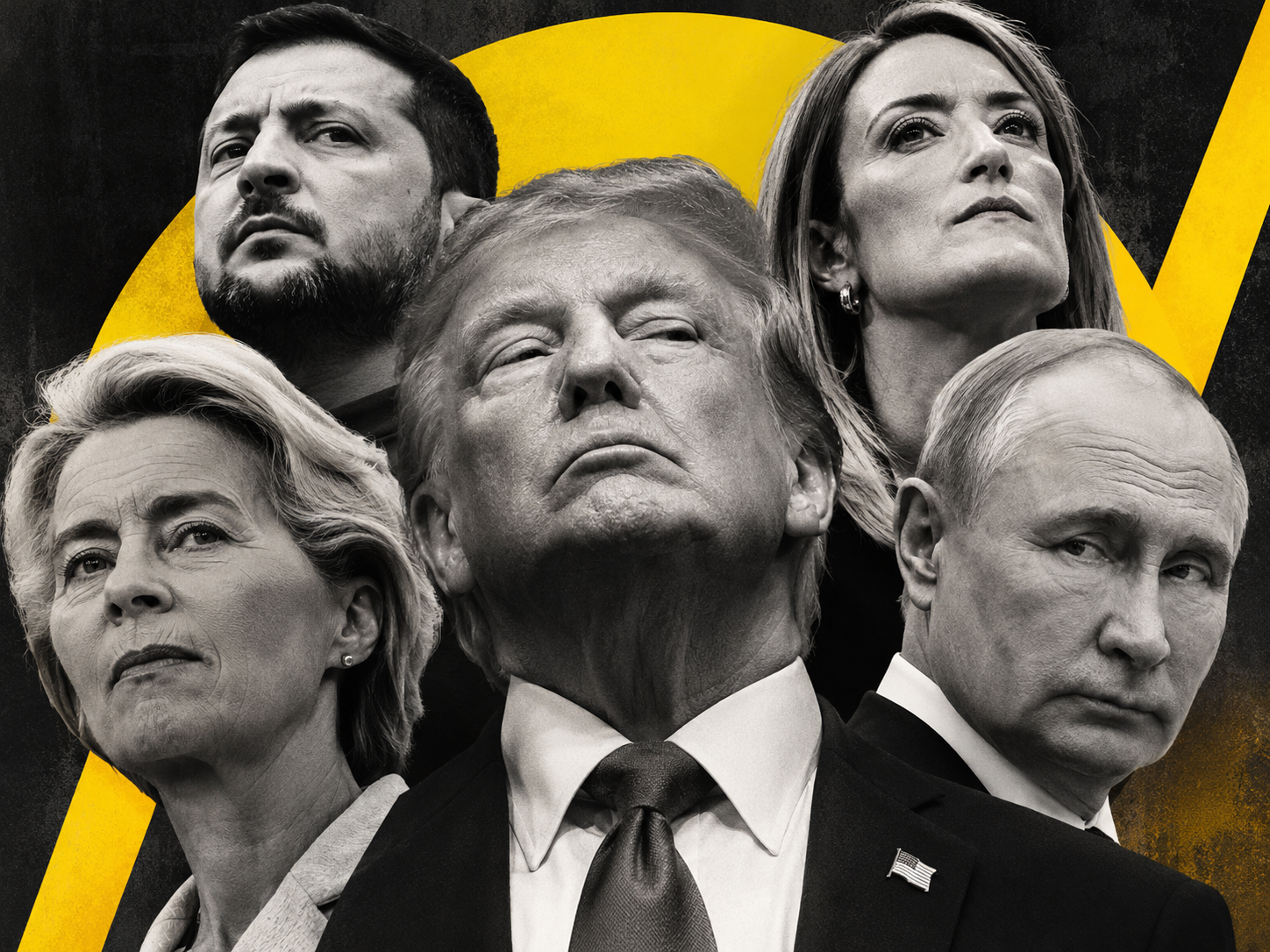
Russia invaded Ukraine. Europe responded by abandoning much of its Russian energy relationship, rearming on a historic scale and becoming a far bigger customer of American weapons and LNG. Anthony P. Bernard asks who benefits, who decides, and what the new security order is costing Europeans.
Anthony is a Malta-based publisher and editor of Money, Skipper, and Techmag, covering business, technology, finance, and lifestyle through interviews and thought-provoking features.
Russia’s war against Ukraine began before February 2022. Eight years earlier, Russian forces seized Crimea, which Moscow subsequently annexed, while conflict erupted in eastern Ukraine. The full-scale invasion escalated a confrontation that had already transformed European security.
That confrontation did not develop in a vacuum. At its 2008 Bucharest summit, NATO declared that Ukraine and Georgia "will become members" of the alliance. Moscow had objected to NATO enlargement for years. Ukraine later embedded the pursuit of full NATO membership in its constitution, and in December 2021 Russia demanded that further NATO enlargement be formally ruled out. NATO refused, arguing that sovereign states must remain free to choose their alliances.
None of that justifies Russia’s invasion. But it does leave a question worth asking: did Western governments adequately reckon with the escalation risk surrounding Ukraine’s unresolved NATO ambitions, particularly after the confrontation had already turned violent in 2014?
Follow the €800 billion
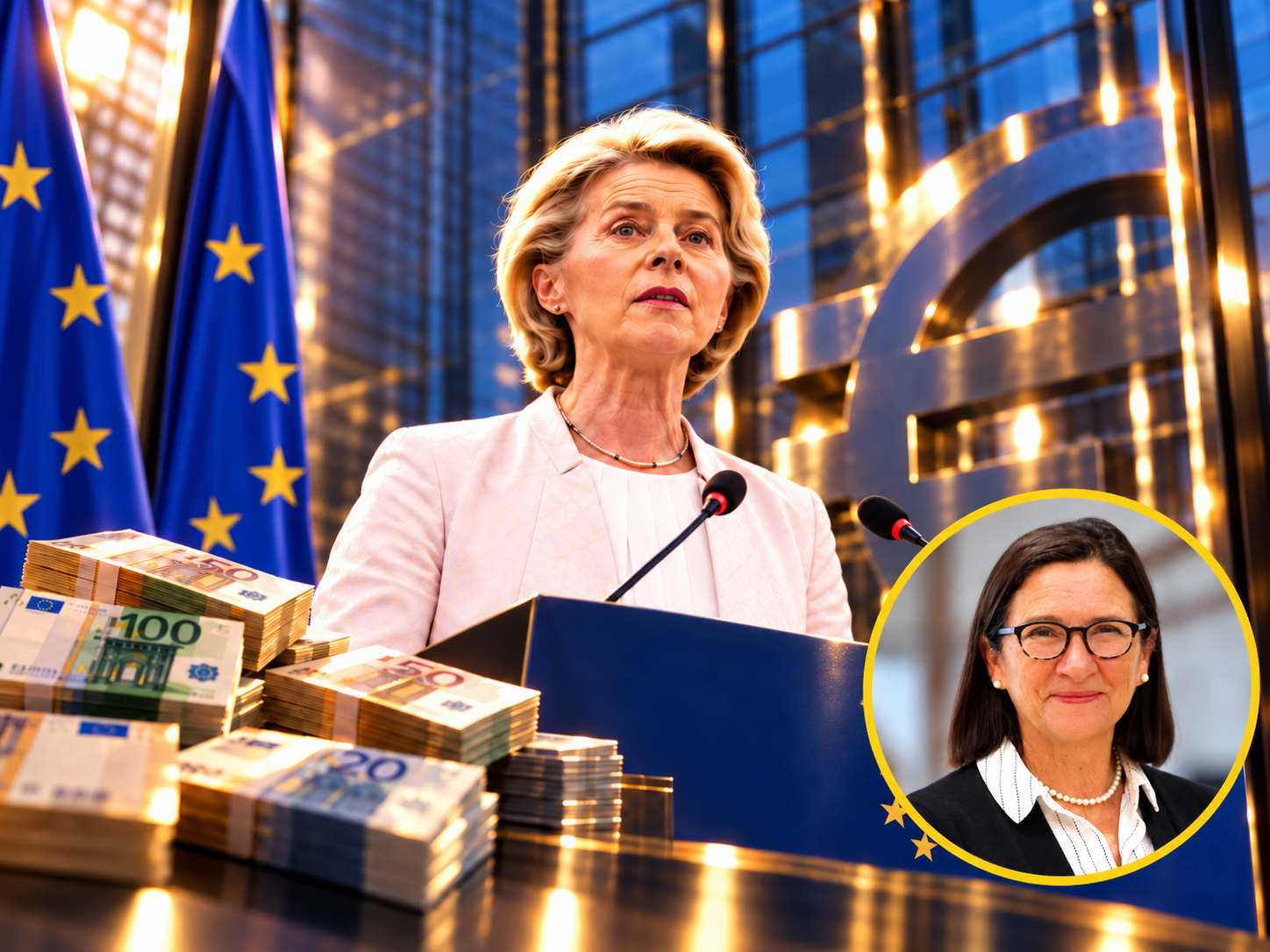
The European Commission's Readiness 2030 plan says member states could mobilise around €800 billion for defence. Roughly €650 billion is potential fiscal space created by looser budget rules; €150 billion is the SAFE loan instrument.
The direction is unmistakable. Europe is reorganising industrial and fiscal policy around rearmament.
The United States has benefited heavily. SIPRI says European arms imports rose 210 per cent between 2016–20 and 2021–25. US arms exports to Europe increased 217 per cent, with America supplying 58 per cent of major arms imports by European NATO members.
Under the 2025 EU-US trade framework, Europe also said it intended to procure $750 billion of American LNG, oil and nuclear-energy products through 2028, while "substantially" increasing purchases of US military equipment. European companies were expected to invest another $600 billion in strategic American sectors.
Perhaps those are simply the commercial consequences of a changed security environment. But has Europe reduced one strategic dependency only to deepen another?
The price of energy independence
Russia supplied around 45 per cent of EU gas imports in 2021. By 2025, its share had fallen to about 13 per cent. LNG had risen to around 45 per cent of EU gas imports, with the United States supplying 58 per cent of Europe's LNG.
Diversification has obvious security value. It was not free.
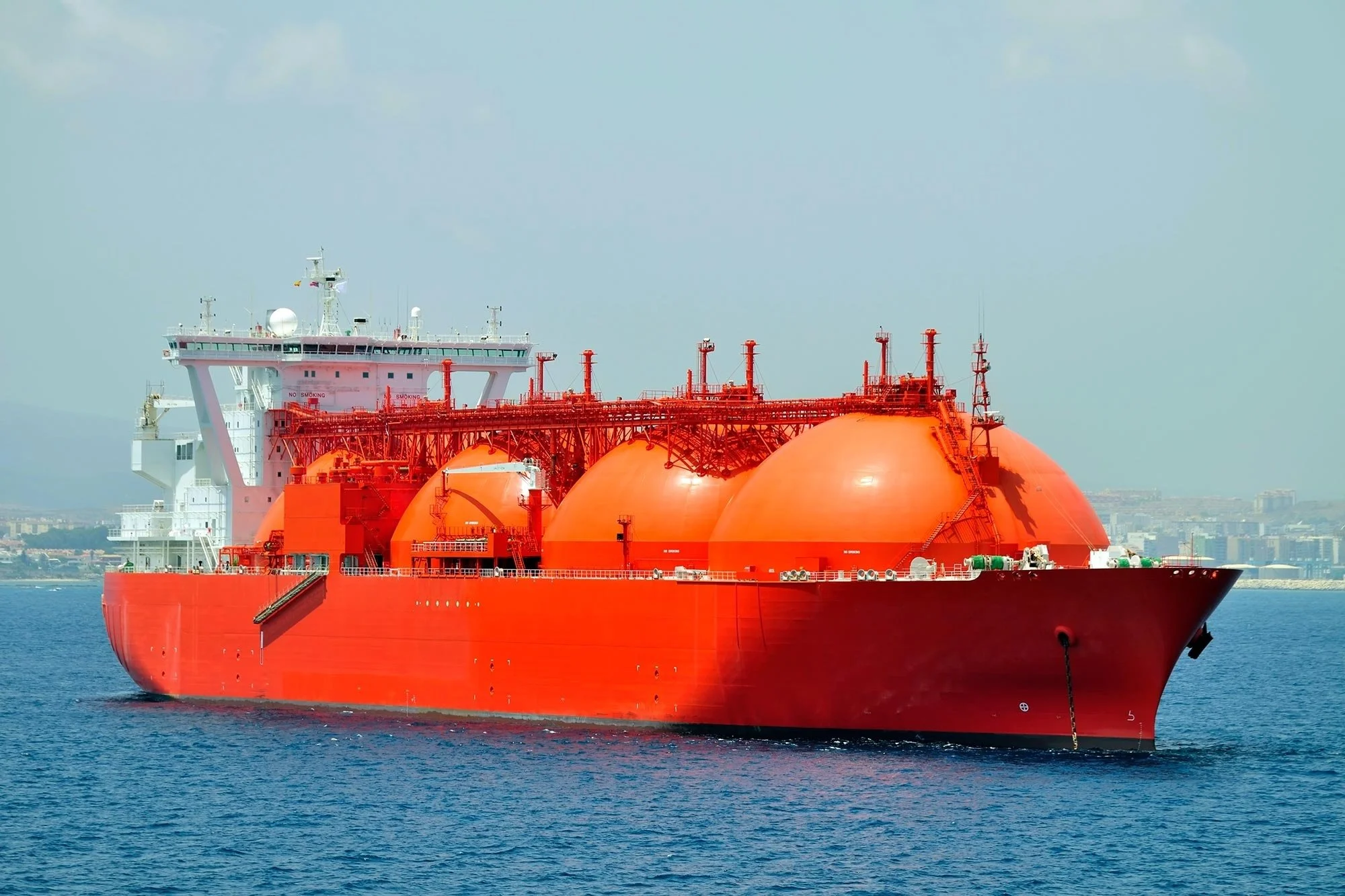
As Europe moved away from Russian pipeline gas, imported LNG filled the gap with the United States emerging as its dominant supplier.
American LNG is not automatically two or three times more expensive than Russian gas; contracts and market conditions matter. But LNG must be liquefied, shipped and regasified. Europe now competes with Asia for cargoes and faces greater exposure to global price movements than under its old pipeline-heavy system. The ECB has noted that Europe historically enjoyed cheaper pipeline gas, largely from Russia, while ACER now warns that greater LNG dependence increases exposure to global markets and US supply.
So what security premium have European households and industry paid for giving up cheap Russian pipeline energy? And was that bill ever presented as clearly as the security argument?
Then someone blew up the pipeline
Nord Stream makes the story harder still. Three of its four strings were destroyed in September 2022. German federal prosecutors have now charged former Ukrainian military officer Serhii K., alleging that he helped plan and execute the sabotage on behalf of Ukrainian state entities. He denies involvement, and no final judgment has been made.

The Nord Stream explosions in September 2022 severed one of Europe’s most important energy links to Russia and accelerated the continent’s shift toward imported LNG.
US intelligence had prior warning of a Ukrainian plan to attack Nord Stream. Later reporting says the CIA communicated to Ukraine's military leadership that Washington opposed such an operation. That runs counter to the theory that America authorised the attack.
But if German prosecutors are right, another question follows. Why has the alleged destruction by people acting for Ukrainian state entities of infrastructure central to Germany's energy security not triggered a much larger European political reckoning?
Who benefits is not the same question as who caused it. But it remains worth asking.
When America needs Russian energy
The irony became harder to ignore in October. For years, Washington had urged Europe to reduce its dependence on Russian energy. After the invasion, the United States banned Russian oil imports and European governments progressively dismantled an economic relationship that had supplied their industries with vast quantities of pipeline gas.
Then America needed cheaper fuel. On 9 October, Donald Trump announced an agreement with Vladimir Putin for Russia to release hundreds of thousands of tonnes of diesel into the US and global markets. Washington temporarily eased sanctions designed to restrict Russian energy revenues so that the arrangement could proceed. The stated reason was straightforward: soaring diesel prices were hurting American consumers.
The contrast is difficult to miss. Europe was asked to accept the economic cost of cutting Russian energy on strategic grounds. Yet when high fuel prices became a domestic American problem, Washington found sanctions flexible enough to negotiate directly with Moscow.
There is another twist. Reuters reported days earlier that US and Russian officials were discussing possible energy agreements involving Nord Stream, including scenarios in which American investors could take part in infrastructure capable of carrying Russian gas back into Europe. The talks are preliminary, politically fraught and could go nowhere. EU sanctions remain a major obstacle. But the possibility itself invites an awkward question.
Was Russian gas unacceptable because Europe depended on Moscow—or would the same gas become acceptable again if American capital sat somewhere between the producer and the European customer?
None of this proves that Europe's break with Russia was engineered to enrich American energy companies. It does show how quickly supposedly immutable security principles can become negotiable when national economic interests change.
Europe paid heavily to restructure its energy system. American LNG gained a huge new market. Now Washington is buying Russian diesel and discussing business arrangements that could potentially reconnect Russian gas with Europe.
Perhaps this is pragmatic diplomacy. For Europeans told that severing Russian energy ties was an unavoidable price of security, it also raises a question: who was the sacrifice ultimately for?
How imminent is the threat?
Europe's defence drive rests heavily on the possibility that today's war could become tomorrow's wider European war. NATO Secretary-General Mark Rutte has warned that, without substantial rearmament, Russia could acquire the capability to attack NATO within three to five years. He argues that spending now prevents that future attack.
Capability, however, is not intent. Estonia's foreign intelligence service said in February that it did not expect a Russian attack on a NATO state in the near term, while warning that Moscow is rebuilding its military capacity. Finland's President Alexander Stubb said in August that he saw no evidence Russia would risk attacking NATO.
Even Rutte has said NATO does not expect an offensive against alliance territory now. Are Europeans being told clearly enough where present intelligence ends and worst-case planning begins?
Spain has challenged the spending consensus. Pedro Sánchez called NATO's 5 per cent target "disproportionate and unnecessary", arguing that Spain could meet its commitments at around 2.1 per cent while protecting the welfare state.
If Spain can question the number without questioning collective defence, why is similar scrutiny elsewhere so often treated as weakness?
Follow the money
Iuliia Mendel served as Volodymyr Zelensky's press secretary from 2019 to 2021. In September, days after Zelensky sanctioned her for what his government described as spreading Russian propaganda and supporting Moscow's position, she gave another interview to Tucker Carlson. Mendel says the sanctions are political retaliation.
Mendel is now an outspoken critic of her former boss, so her claims require scrutiny. But one challenge she issued to Western journalists is difficult to ignore: "follow the money."
She argues that much of the aid described as support for Ukraine becomes spending on weapons produced in donor countries, and questions whether the financial interests created around the war help sustain increasingly alarming public narratives.

Iuliia Mendel with Volodymyr Zelensky during her time as the Ukrainian president’s press secretary. Mendel served in the role from 2019 to 2021 and has since become an outspoken critic of his government.
That is her argument, not proof. Yet rearmament has created enormous order books for defence manufacturers. The question is whether those companies merely respond to government policy or increasingly help shape the climate in which policy is made.
Europe of values?
The question of double standards becomes harder to avoid when Europe's treatment of Russia is placed beside its treatment of Israel. The EU has imposed 21 sanctions packages on Russia, targeting banks, energy, technology, transport and large parts of its war economy. More than 3,000 individuals and entities are now subject to EU restrictive measures. The political argument is straightforward: invading another country, attacking civilians and violating international law must carry economic consequences.
Now consider Gaza.
Benjamin Netanyahu remains subject to an International Criminal Court arrest warrant over alleged war crimes and crimes against humanity, including starvation as a method of warfare and intentionally directing attacks against civilians. Separately, the International Court of Justice has imposed binding provisional measures on Israel under the Genocide Convention while South Africa's case proceeds. The Court has not yet ruled on whether Israel committed genocide.
Roberta Metsola has called the situation in Gaza "untenable and unacceptable", demanded a ceasefire and said too much innocent blood has been spilt. What she has not done publicly is describe Israel's conduct as genocide or advocate anything resembling the economic isolation imposed on Russia.
That difference deserves scrutiny.
Europe has sanctioned individual extremist Israeli settlers and organisations. It has debated suspending trade preferences and taken increasingly critical positions towards the Israeli government. But the economic response remains dramatically narrower than the sanctions regime imposed on Moscow.
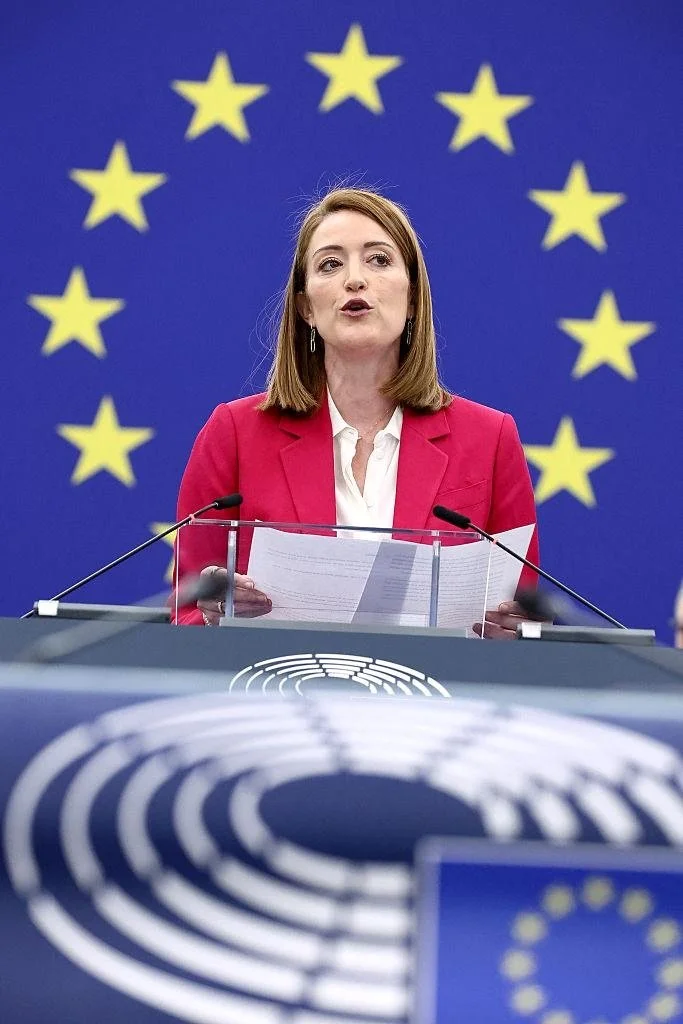
Roberta Metsola
The conflicts are different, and international law must consider each on its own facts. Russia launched a full-scale invasion of a neighbouring sovereign state. Israel says its military campaign followed Hamas's 7 October attacks and is directed against Hamas.
But Europe itself says its foreign policy rests on principles rather than alliances: civilian protection, international humanitarian law, democratic accountability and the rule of law.
So what happens when those principles collide with geopolitical friendship?
Why does Russia's violation of international law produce sweeping sanctions across an entire economy, while another conflict involving a prime minister wanted by the ICC and an ongoing genocide case before the ICJ produces a much more limited economic response?
And then there is Iuliia Mendel.
Mendel, Volodymyr Zelensky's former press secretary, was due to speak inside the European Parliament in Strasbourg on 16 September at an event entitled Ukraine: Dare to Choose Peace – Diplomacy, Not Escalation. AfD MEP Hans Neuhoff organised the event; it was not an official Parliament event.
She never made it through the doors.
The European Parliament has confirmed that Mendel was denied access to the building. An official described it as "standard procedure" but did not publicly explain the grounds for excluding her. Mendel had been sanctioned by Zelensky three days earlier and says the two events were connected.
In her subsequent interview with Tucker Carlson, Mendel went further. She said organisers were told that Roberta Metsola personally had banned her from entering, and that attempts were also made to prevent her from appearing by video and to deny interpretation into German and French. The video link ultimately went ahead.
That is Mendel's account. MONEY has not independently confirmed that Metsola personally ordered the exclusion. What is established makes the timing striking enough.
“At 9am, Metsola spoke of a Europe 'where journalists are free to write'. A few hours later, Mendel was refused entry.”
At 9am that same morning, Metsola opened the State of the Union debate by describing the Europe its citizens wanted: one founded on values, where people live in freedom, "where journalists are free to write", and where justice and the rule of law distinguish Europe's way of life.
A few hours later, a former Ukrainian presidential spokesperson invited by an elected MEP to argue for negotiations rather than escalation was refused entry to the institution Metsola leads.
Perhaps Parliament had legitimate security grounds. If so, what were they?
Did Parliament consider Mendel a threat because Ukraine had sanctioned her? Did Parliament conduct its own assessment, or effectively import Kyiv's judgement? Did the content of her proposed speech matter? And if Metsola personally approved the exclusion, as Mendel alleges, what criterion was used?
These are not trivial procedural questions. The EU routinely presents itself as something more than an economic bloc. Freedom of expression, political pluralism, the rule of law and the right to challenge power are central to its justification for supporting Ukraine against Russia.
Those principles are easiest to defend when everyone agrees. Their real test comes when the speaker is inconvenient.
Democracy in wartime
Ukraine faces a similar tension. Ukrainian law prohibits elections under martial law, and the practical obstacles are formidable: soldiers at the front, millions of displaced voters, occupied territory and continuing missile attacks. Polling reported by Reuters also indicates that a majority of Ukrainians favour waiting until after the war.
But this creates a democratic paradox. If elections cannot take place while war continues, political leaders remain in office while wartime conditions persist.
That does not prove Zelensky wants to prolong the conflict.
It does make the route back to ordinary democratic accountability a legitimate subject of scrutiny — particularly for European governments that describe Ukraine's defence as a defence of democracy.
The case for rearmament
A powerful answer remains. Russia invaded Ukraine. European militaries allowed ammunition stocks and production capacity to deteriorate. Moscow is rebuilding its armed forces. Deterrence only works when an adversary believes Europe has both the weapons and the willingness to defend itself.
A stronger European defence industry could eventually reduce dependence on America. Cutting Russian gas reduced Moscow's leverage. Supporting Ukraine may ultimately be cheaper than confronting successful Russian expansion later.
Perhaps Europe is paying a large but necessary insurance premium.
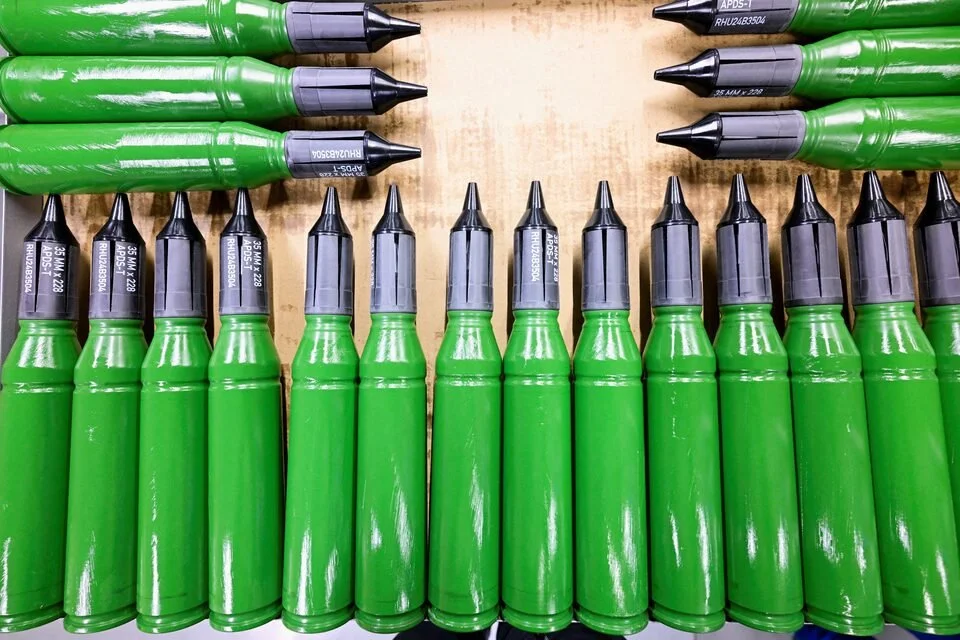
155mm artillery shells at Rheinmetall’s Unterlüß facility in Germany
The alternative is less comfortable: emergency becomes economic model. Defence budgets rise permanently. Energy relationships become geopolitical. Contractors, governments and institutions acquire interests around confrontation, and scrutiny is dismissed as naïve, disloyal or pro-Russian. No public evidence shows one hidden hand orchestrating the war. One does not need to exist for incentives to matter.
Russia starting the war does not end the inquiry into how Europe responded. When hundreds of billions move under the banner of security, Europeans are entitled to ask who benefits, who decides, what alternatives were rejected and how much the strategy costs them.
Following the money is not taking Moscow's side. It is doing the audit.








Finance can no longer be judged simply by how much business Malta attracts. FinanceMalta Chairman George Vella argues that the real test is whether capital can help build the industries, technologies and businesses that will drive the country’s next phase of growth.