

The cavalry
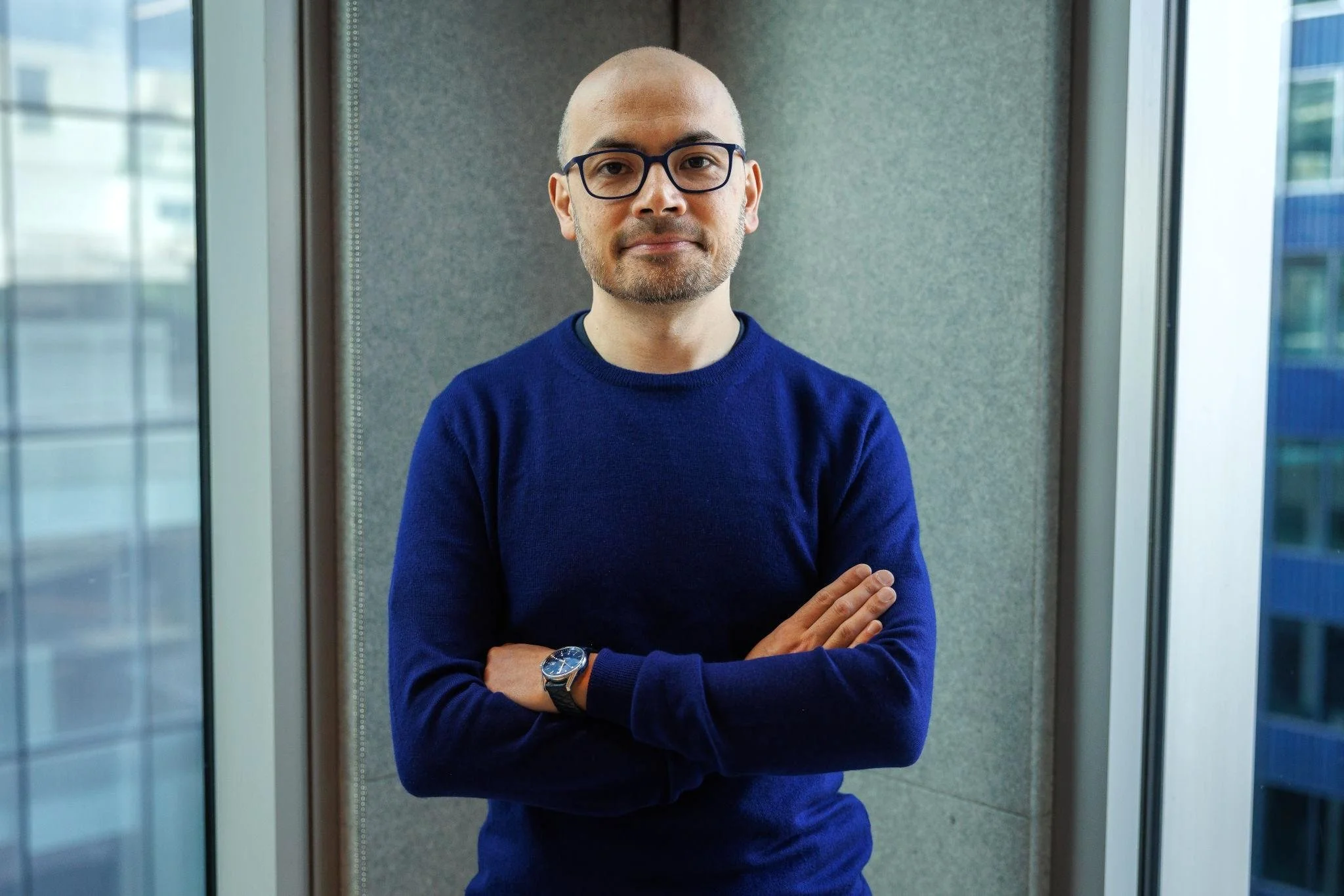
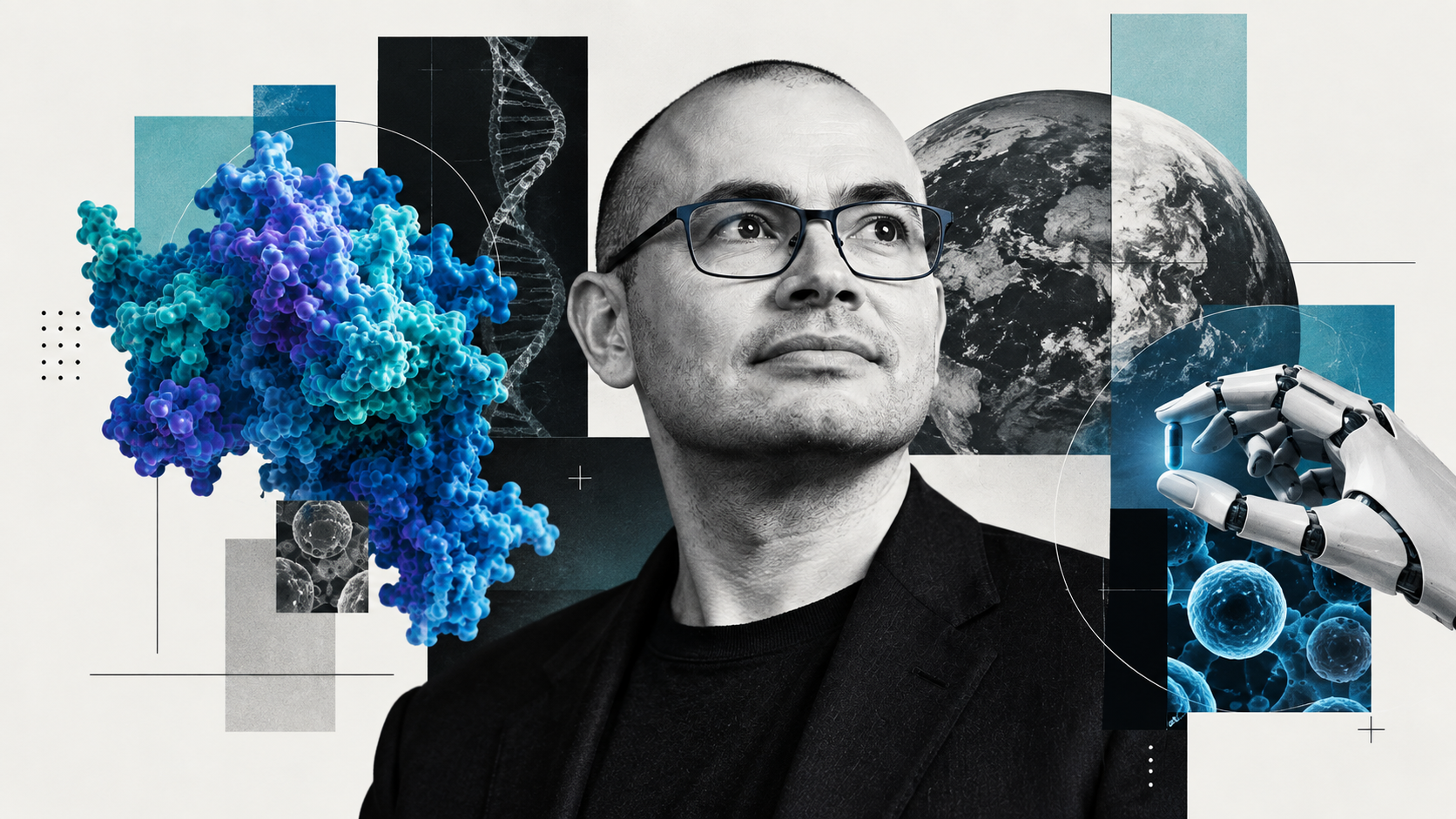
What if the most powerful technology in history was built by someone determined to understand life, not control it? Techmag editor Anthony P. Bernard explores how Demis Hassabis has spent a lifetime chasing intelligence itself—with consequences that are already reshaping medicine.
Demis Hassabis prefers a version of the Turing test to the original, and it has nothing to do with fooling a human into believing they are talking to a machine. Strip an AI system of everything discovered after 1911, he proposed at an AI summit in India in February 2026, and ask whether it can arrive, unaided, at the general theory of relativity by 1915 — the way Einstein did, reasoning from a stubborn intuition about gravity and acceleration. Pass that test, Hassabis argues, and you have something worth calling artificial general intelligence. Fail it, and "you're still just looking at an advanced search engine."
It is a strange benchmark for the co-founder of one of the world's most commercially consequential AI companies to set for himself, because it has almost nothing to do with the metrics that usually define his industry — market share, token throughput, enterprise contracts. It has everything to do with an older and stranger ambition: that intelligence, once understood well enough to be rebuilt in silicon, could become the most powerful scientific instrument humanity has ever had.
Hassabis's career is not really the story of a company. It is the story of what happens when someone spends four decades treating intelligence itself as a puzzle to be solved, and then discovers that the tool built to solve it might be pointed at biology, medicine and the structure of matter, rather than at advertising or warfare. That is not guaranteed. It is not even, on the evidence of Hassabis's own conduct, entirely up to him. But this particular moment in AI needs an alternative story told properly — not as hagiography, but as an honest account of what a scientifically minded steward of the most powerful technology in history has actually tried to do with it, and where that effort runs into the limits of good intentions.
Hassabis was a chess master by thirteen, good enough that by seventeen he was the lead programmer on Theme Park, one of the best-selling simulation games of the 1990s. At the same time, he worked at Bullfrog Productions alongside games design legend Peter Molyneux. He finished his A-levels two years early, took a double first in computer science at Cambridge, founded his own games studio, Elixir, in his early twenties, and then — at a point when most successful games designers would have kept building games — walked away to study cognitive neuroscience at UCL. He wanted to understand memory and imagination well enough to reverse-engineer them. His doctoral research on amnesia patients who could not imagine future scenarios, only recall past ones, later shaped the architecture of "experience replay" in DeepMind's earliest reinforcement-learning systems: AI agents given something like a hippocampus, able to replay and learn from their own past.
In 2010, with Shane Legg and Mustafa Suleyman, he co-founded DeepMind on a mission statement that has barely changed in the retelling since: "solve intelligence, and then use that to solve everything else." It is a sentence that sounds either magnificently ambitious or faintly absurd depending on how seriously you take it, and Hassabis has always insisted on taking it entirely seriously. Games were never the point. They were, in his own framing, a laboratory — closed, measurable environments in which learning algorithms could be tested against a clear score before being pointed at the far messier, higher-stakes problems of the real world.
The first proof came in 2016, when AlphaGo beat Lee Sedol, the world's top Go player, four games to one. Go had been considered close to unsolvable by brute-force computing: more legal positions exist on a Go board than atoms in the observable universe, so no machine could calculate its way to victory as chess engines had done. AlphaGo had to learn something closer to judgement and intuition. In the second game, it played a move — later known simply as "Move 37" — so unconventional that commentators assumed it was a mistake, until it became clear the machine had seen something in the position no human had. It was less a demonstration of computational brute force than of a kind of alien creativity, and it persuaded a great many sceptical scientists that these systems might be capable of more than pattern-matching.
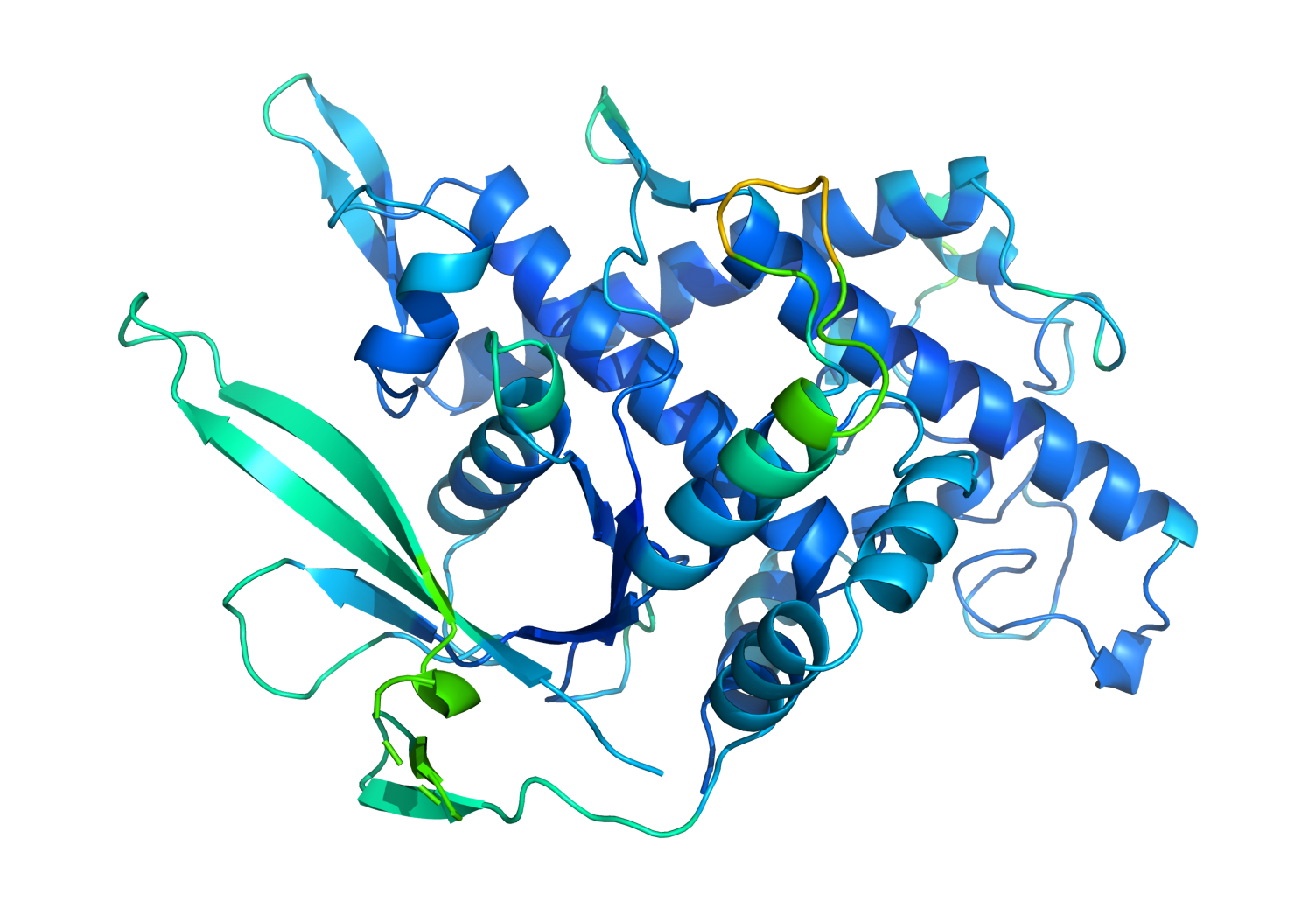
AlphaFold revealed the three-dimensional structures of proteins at unprecedented scale, turning one of biology’s most difficult problems into a computational challenge AI could help solve
Hassabis then did something that, in retrospect, defined the rest of his career: he pointed the same underlying technique at one of biology's oldest unsolved problems. Proteins are the molecular machines of life — they build tissue, catalyse reactions, carry signals, defend against disease — and what a protein does is determined almost entirely by its three-dimensional shape, which folds, origami-like, out of a one-dimensional chain of amino acids. Predicting that shape from the sequence alone had defeated structural biologists for fifty years; working it out experimentally, protein by protein, could take a PhD student the better part of a year. In 2020, a DeepMind team led by chemist John Jumper unveiled AlphaFold2, which could do it in minutes, with an accuracy that stunned the field at the CASP competition where such claims are independently tested. Four years later, Hassabis and Jumper shared half of the 2024 Nobel Prize in Chemistry for it — the other half went to David Baker, for the inverse feat of designing entirely new proteins that do not occur in nature. The Nobel committee called it the fulfilment of "a 50-year-old dream."
What happened next is the part of the story Hassabis returns to more than the prize itself. DeepMind, working with the European Molecular Biology Laboratory, released the AlphaFold Protein Structure Database for free, covering the predicted structures of virtually all 200 million proteins known to science. "Anyone can use it for anything," Hassabis said at the time of release, asking only for a citation. By early 2026, writing alongside Google's James Manyika, he noted that more than three million researchers had used the freely available database in over 190 countries — more than a third of them in low- and middle-income countries. These places could never have built or licensed a comparable tool themselves. It is a genuinely rare thing in modern technology: a capability of enormous economic value, handed to the global scientific community without a paywall.
On closer inspection, it is also only half the picture — and this is where the feature's central tension lives. The database is free. The next generation of the technology is not. In 2021, Hassabis founded Isomorphic Labs, an Alphabet-owned but commercially independent company built explicitly to turn AlphaFold's successors into drugs, and by early 2026 it had struck deals worth close to three billion dollars with Eli Lilly and Novartis, aimed at "undruggable" disease targets that conventional chemistry had given up on. Isomorphic keeps the resulting intellectual property, collects milestone payments and royalties, and behaves, in every commercially relevant sense, like a well-funded biotech company — because it is one. Hassabis's own framing draws a clean line between the two: foundational scientific knowledge should be a public good; the expensive, high-risk, highly regulated business of turning a predicted structure into an approved medicine that a pharmaceutical company can manufacture at scale is a different undertaking, one that in his view genuinely requires commercial capital and patent protection to happen at all. Whether that line will hold as AI-designed medicines start reaching patients — and whether "free knowledge, priced cures" is a durable settlement or simply the shape capitalism gives to any sufficiently useful discovery — is not a question Hassabis has fully answered. It is not obviously one that any single company, however well-intentioned, gets to answer alone.

Demis Hassabis and John Jumper, the scientists behind AlphaFold. Their work on AI-powered protein structure prediction earned them half of the 2024 Nobel Prize in Chemistry
The same tension runs through what he says about artificial general intelligence, which he now believes could arrive within five years — sooner than the five-to-ten-year window he was giving as recently as last year. He describes the stakes almost geologically: something like ten times the impact of the Industrial Revolution, he told the India AI Impact Summit in February 2026, "happening at ten times the speed." He is, by his own admission, one of the people pushing hardest to get there. He is also one of the loudest voices insisting the technology be handled with something closer to nuclear-level caution — DeepMind's own 145-page safety paper warns of "severe harm" scenarios, including risks that could "permanently destroy humanity," should sufficiently capable systems be misused or lose meaningful human oversight. Asked in 2022 about Silicon Valley's instinct to move fast and break things, Hassabis replied bluntly: "I would advocate not moving fast and breaking things." He compared reckless developers to laboratory scientists who "don't realise they're holding dangerous material."
That caution has not always translated into practice, and it is worth stating plainly rather than skating past it. When Google acquired DeepMind in 2014, Hassabis secured a written pledge that the technology would never be used for military purposes. It no longer holds: DeepMind's systems are now sold to militaries including those of the United States and, as TIME reported in 2024, Israel. Pressed on the apparent contradiction, Hassabis's defence is geopolitical rather than technological — that "the world's become a much more dangerous place," that democratic outcomes can no longer be assumed, and that DeepMind's role should be narrowed to areas such as cyber-defence and biosecurity, where he argues Western capability genuinely matters. It is a coherent argument. It is also, unmistakably, a retreat from a promise he once treated as foundational, and it sits uneasily beside the image of a scientist who claims to identify first as a researcher and only "second" as an entrepreneur.
What makes Hassabis more interesting than a standard technology-industry profile is what he thinks a successful outcome actually looks like. Pressed by TIME on the best case for AGI, he did not reach for productivity statistics. He talked about curing "maybe all diseases," AI-assisted fusion power and room-temperature superconductors, and a world of what he calls "radical abundance," where energy and resources are no longer scarce enough to drive conflict and inequality. "It's almost like the cavalry," he said. "I think we need the cavalry today." As his interviewer pointed out, removing resource scarcity does not automatically remove inequality — land, power, and control over the systems themselves remain finite. Hassabis conceded as much, admitting that radical abundance would probably require "a new political philosophy," one he has not yet worked out and openly says he has not spent enough time thinking about.
That admission is more revealing than any of his optimism. Hassabis is genuinely trying to build a tool for understanding disease, matter and possibly the deep structure of scientific discovery itself, and the AlphaFold database is real evidence that a frontier AI lab can hand something of enormous value to the world without extracting rent from it. But he is doing this inside Alphabet, dependent on its computing infrastructure and subject to its commercial and geopolitical pressures, building a company — Isomorphic — that must eventually behave like the pharmaceutical industry it is trying to disrupt, and warning about existential risk from a technology he is racing to build faster than almost anyone else. None of that makes him a hypocrite. It makes him the central figure in an unsettled argument about whether the values of the people who build a technology can survive contact with the incentives that fund it.
Perhaps that is the more honest way to frame what is coming, rather than asking whether machines will eventually out-think us. The tools capable of solving fusion, or curing disease, or discovering the next Einstein-level insight may well exist within a decade. Whether they do any of that depends less on how intelligent they become than on who is deciding what to ask them, and what they are allowed to keep for themselves once they have the answer.
SOURCES
TIME — "Google DeepMind CEO Demis Hassabis on AGI and AI in the Military" (Billy Perrigo, 2025)
The Nobel Prize in Chemistry 2024 — Press release and Popular Information, NobelPrize.org
Google DeepMind — "Demis Hassabis & John Jumper awarded Nobel Prize in Chemistry" (official blog)
Fortune — "AI is transforming science" by James Manyika and Demis Hassabis (February 2026)
Isomorphic Labs — company statements and Nobel lecture materials; Eli Lilly/Novartis deal announcements (FierceBiotech, CHEManager)
NBC News, Yahoo/AOL — DeepMind AGI safety paper coverage and Hassabis AGI timeline statements
Yahoo Finance/AOL — coverage of Hassabis's remarks at the India AI Impact Summit, February 2026
UCL News — biographical background on Hassabis's academic career






As AI optimises more of our lives, Adrian Galea argues that lived experience, taste, judgement and human connection could become our most valuable competitive advantages.