

Why AI alone isn’t enough

AI can understand documents faster than ever, but intelligence alone does not transform a business. Nick Camilleri, managing director at Avantech, argues that real value emerges when AI connects information to workflows, systems, and the actions that follow.
Artificial intelligence has become one of the biggest topics of conversation in business. Organisations are investing in tools that can analyse information, recognise patterns and automate tasks that, only a few years ago, required significant human effort. But businesses need to ask a question before adopting any AI solution: what happens after the AI has done its job?
Document processing is a good example.
AI has fundamentally changed what is possible when capturing business documents; traditionally, extracting information from invoices, receipts, contracts, and other documents often required predefined templates, with systems told what information to look for and where to find it.
Today, AI can understand different document structures and extract relevant information without that same level of configuration. With Scan2x, for example, AI can process a wide range of documents, including invoices, receipts, identity documents, and contracts, extracting the information businesses need to keep their processes moving.
That is a significant step forward. But understanding a document is only part of the equation.
Imagine an invoice arrives, and AI successfully identifies the supplier, invoice number, date, totals and line items. Technically, the AI has done its job. But if somebody then has to manually transfer that information into another system, send an email asking for approval, save the document in the correct location and notify the next person in the process, the business is still carrying much of the administrative burden.
You may have improved one task, but you have not necessarily improved the process.
This distinction is important. Businesses do not operate as a collection of isolated tasks. Information moves between people, departments and systems. A document arriving in an organisation usually starts something else: an approval, a payment, an onboarding process, an update to a customer record, or another business action.
The real value begins when the information extracted from that document can actually drive what happens next.
I often compare the Scan2x experience to using an ATM. You authenticate yourself, choose what you want to do, press a button and walk away. You don't need to understand everything happening behind the screen for the transaction to be completed correctly.
Document automation should feel just as simple.
With Scan2x, the user authenticates, selects the required job and submits the document. Behind that simple interaction, the system identifies the document, extracts and validates information, applies the appropriate workflow, and delivers the document and its data to the required destination.
Authenticate. Press one button. Walk away. Everything else happens automatically.
That simplicity matters because successful technology shouldn't add complexity to someone's workday. It should remove it. The sophistication should happen behind the scenes, while the experience for the person using the technology remains straightforward.
That's why AI alone isn't enough.
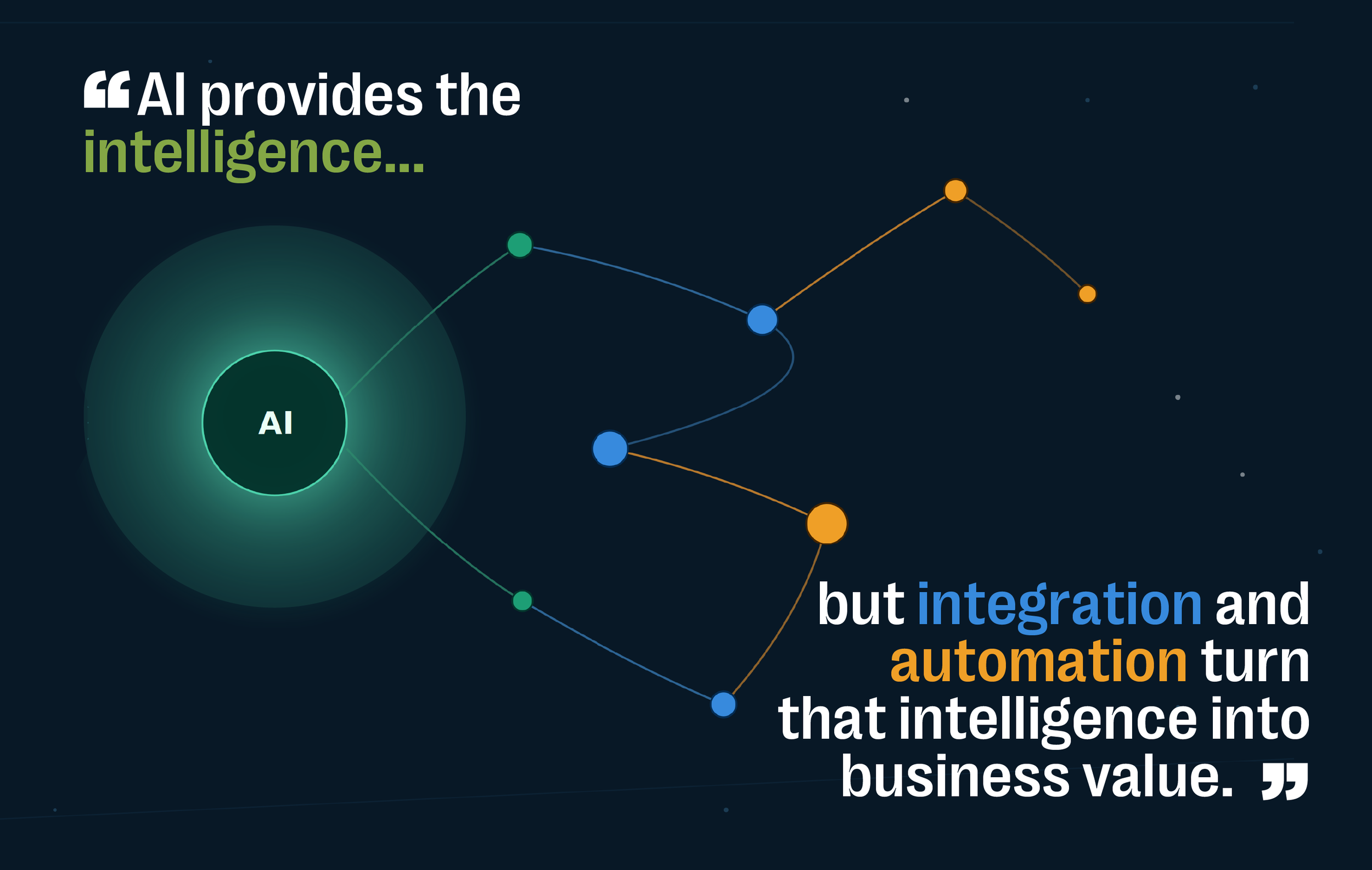
AI provides the intelligence to understand the document, but that intelligence becomes truly valuable when connected to everything around it. The extracted information can be normalised and validated, integrated with databases, web services and existing business applications, and used to drive workflows and subsequent actions.
This also means businesses don't necessarily need to replace the systems they already rely on to benefit from AI. In many cases, the greater opportunity is to make those systems work better by connecting them with intelligent document processing. AI becomes part of the wider technology environment rather than another isolated tool employees have to manage.
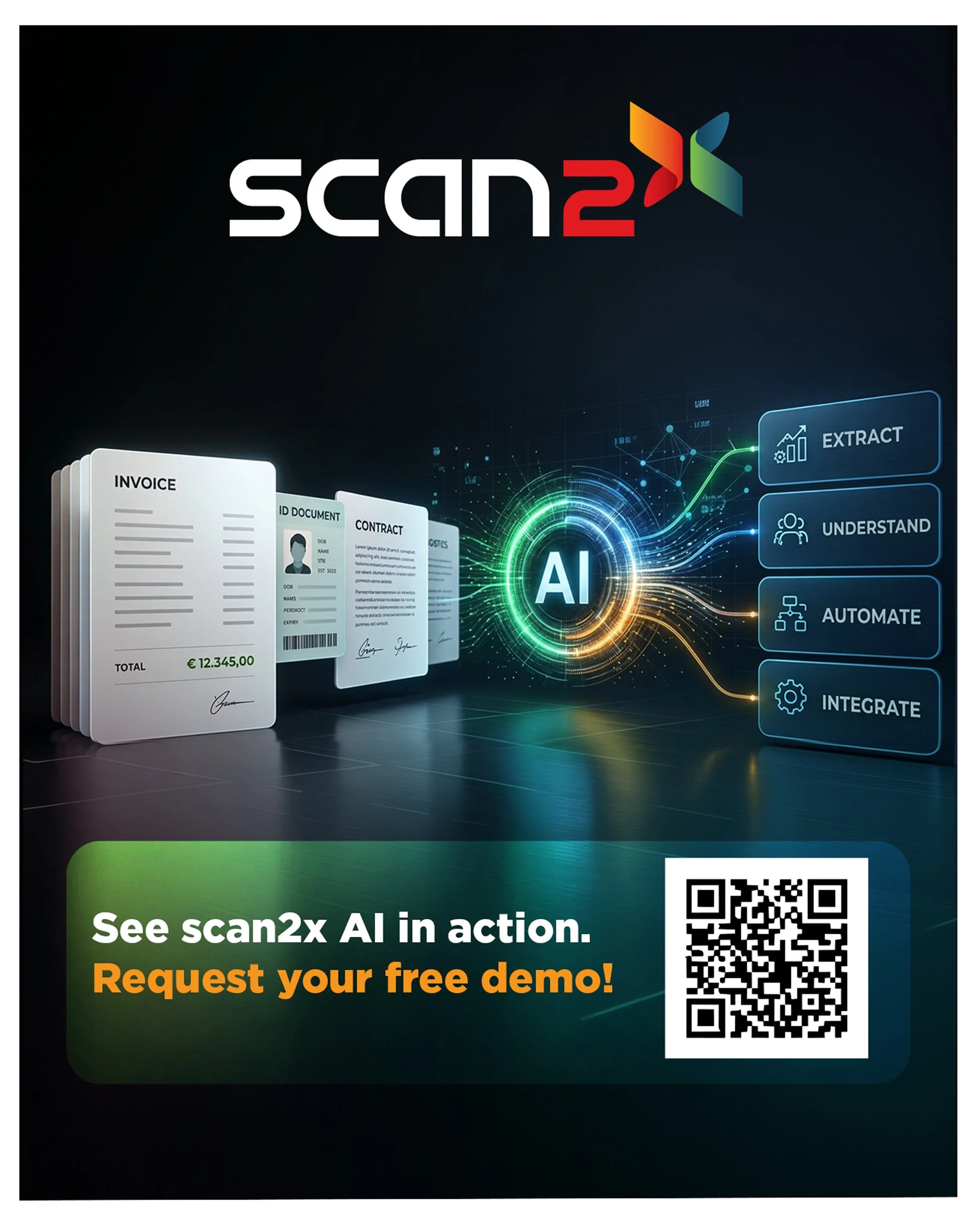
The same principle applies beyond invoices. A contract may contain information that needs to reach a contract management system. An identity document may form part of an onboarding process. Incoming documents may need to be classified and routed automatically to the right people or systems. A receipt may contain information that needs to be extracted, validated and passed into an expense or accounting process.
Documents change, but the principle remains the same: understand the information, determine what needs to happen, and move it forward.
In each case, AI provides the intelligence, but integration and automation turn that intelligence into business value.
As organisations decide where to invest in AI, I believe this distinction will matter more and more. The novelty of simply having AI will disappear. Businesses will care less about whether a product has an AI label and more about whether it saves time, reduces manual intervention, improves information flow, and makes processes easier for the people actually using them.
That is ultimately how we should measure the value of technology.
The question therefore shouldn't simply be, "What can AI understand?"
The better question is: "What can my business do with what AI understands?"
Because ultimately, AI alone is not the transformation. What you enable it to do next is.

















As AI optimises more of our lives, Adrian Galea argues that lived experience, taste, judgement and human connection could become our most valuable competitive advantages.