

The Seeing-Stone: Inside Palantir's manifesto for a new world order
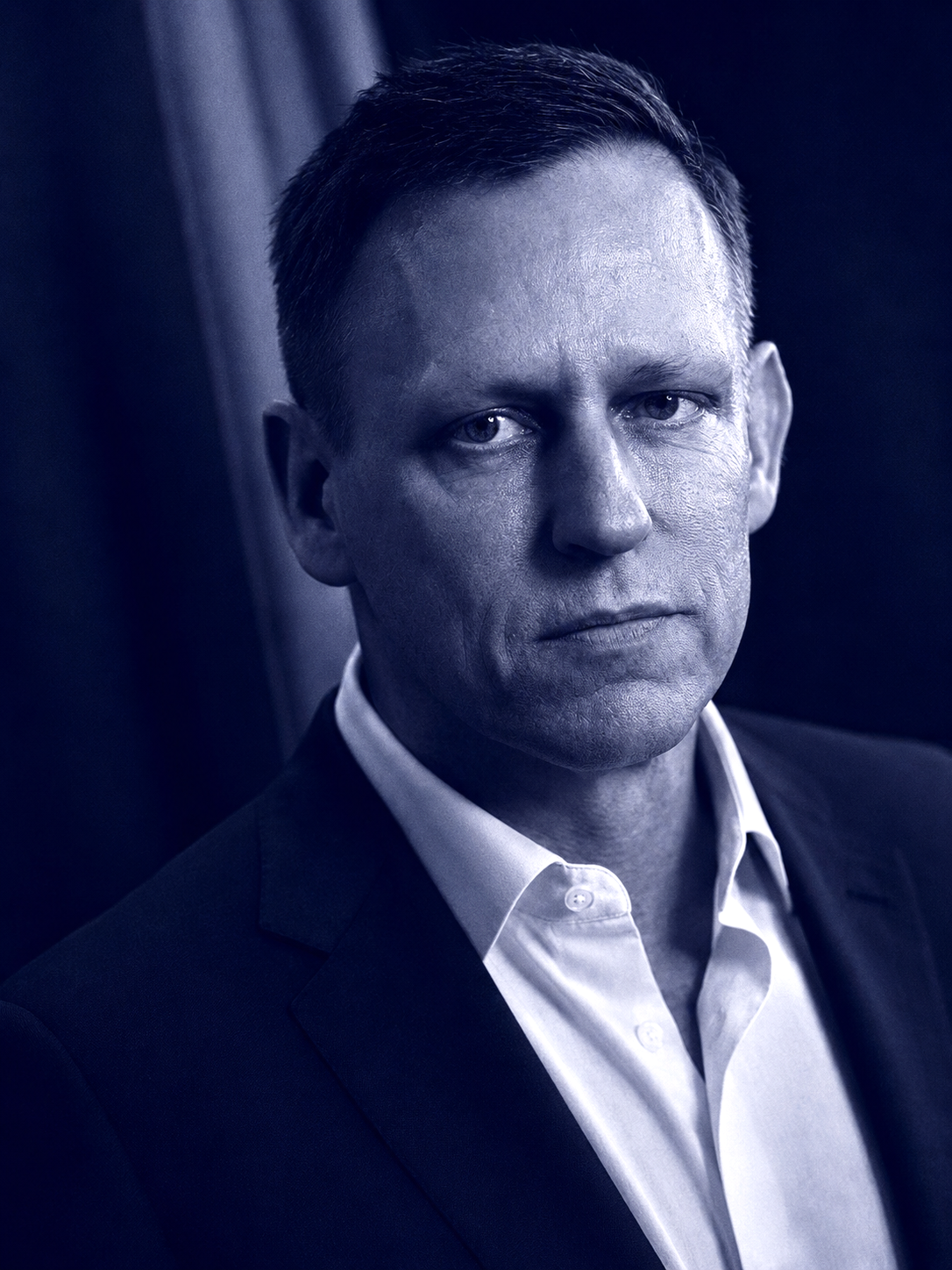
Peter Thiel
Palantir says Silicon Valley must rediscover patriotism, embrace hard power and help defend the West. Anthony P. Bernard examines the manifesto behind one of the world's most influential technology companies and asks who is really shaping the new technological order.
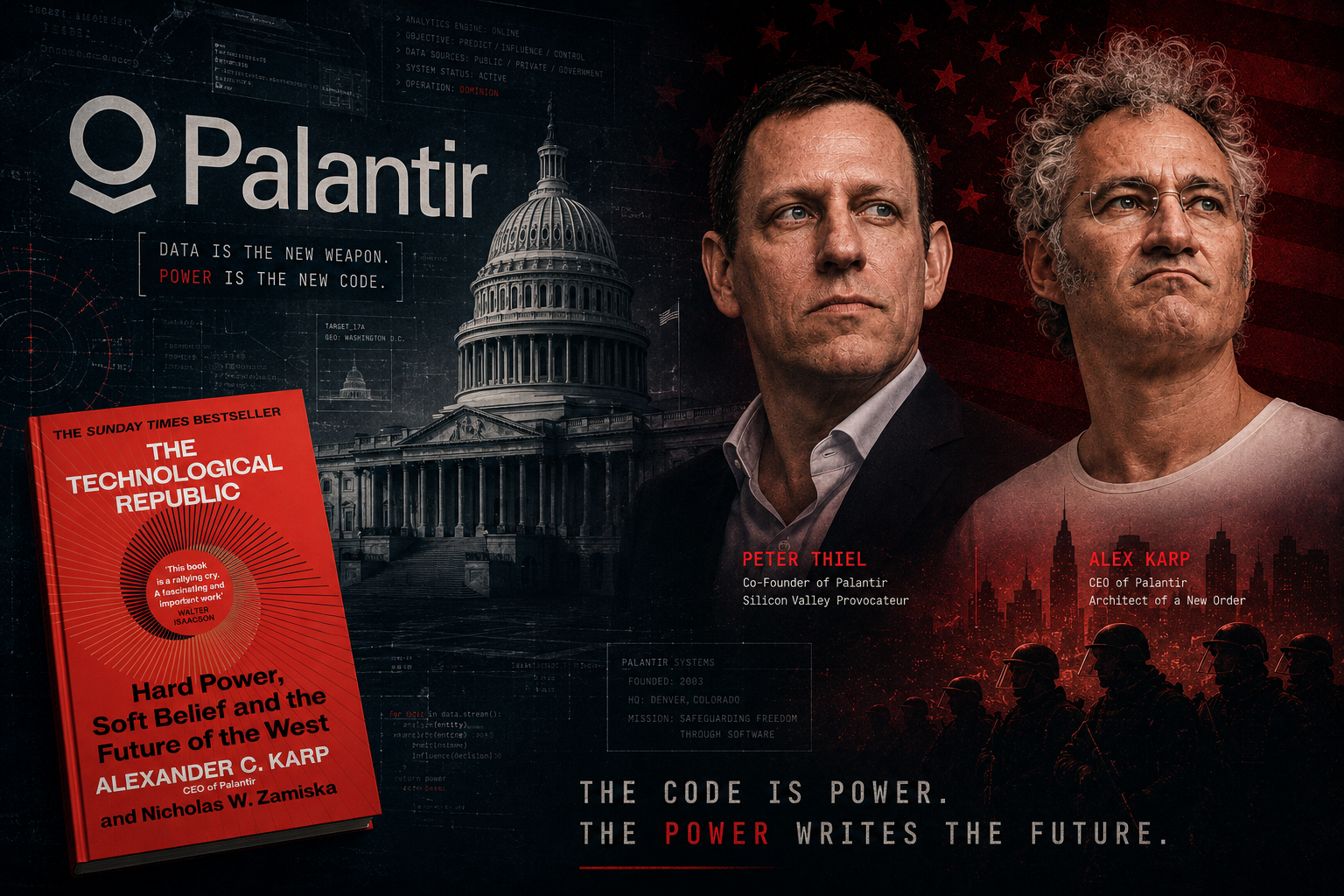
There is a particular kind of vertigo that comes from watching a company post its own political philosophy on social media and getting 32 million views for it. That is precisely what happened in April 2026, when Palantir Technologies distributed a 1,000-word thread on X, condensing 22 points from The Technological Republic: Hard Power, Soft Belief, and the Future of the West — a book written by its own CEO, Alexander C. Karp, and his head of corporate affairs, Nicholas W. Zamiska. What looked, on the surface, like a marketing exercise for a year-old business book quickly read as something else entirely: a declaration of intent from a company that no longer sees itself as a vendor of software, but as an architect of the coming order.
Palantir was co-founded in 2003 by Karp and Peter Thiel and seeded in its early years by In-Q-Tel, the CIA's venture arm. Two decades on, its systems sit inside the US Army's Maven programme, Israel's targeting operations in Gaza, ICE's deportation-tracking platform ImmigrationOS, and predictive policing tools used by the NYPD. Its market capitalisation has pushed past $300 billion. When a company embedded this deeply in war, policing and border enforcement declares that "hard power in this century will be built on software," it is not offering a forecast. It is describing its own balance sheet.
THE 22 POINTS, DECODED
What does Palantir actually believe? Techmag distils the manifesto into plain English.
Silicon Valley owes America. The engineering elite has a moral obligation to help defend the country that enabled its success.
Escape the tyranny of apps. Silicon Valley has focused too much talent on smartphones, apps and consumer convenience rather than civilisation-scale problems.
Free email isn't enough. Technology should deliver economic prosperity and security, not merely convenient digital products.
Hard power needs software. Democratic values and persuasive rhetoric cannot defend themselves. Military power increasingly depends on software.
AI weapons are inevitable. The debate is no longer whether autonomous and AI-enabled weapons will exist, but who builds them and for what purpose.
Bring back national service. Citizens should share responsibility for national defence, potentially moving away from an exclusively volunteer military.
Build the better weapon. If soldiers need better rifles, software or technology, engineers have an obligation to provide it.
Public servants don't need to be saints. Government struggles to attract exceptional people and should accept that talented public officials will be imperfect.
Give politicians room to be human. An unforgiving political culture discourages capable people from entering public life.
Stop treating politics as therapy. Citizens should not expect politicians or political movements to provide personal meaning or psychological fulfilment.
Victory demands restraint. Defeating an adversary should produce reflection rather than celebration or humiliation.
AI will replace nuclear deterrence. The atomic era is giving way to a new form of military deterrence based increasingly on artificial intelligence.
America remains exceptional. Despite its flaws, the US has done more than any other country to advance opportunity and progressive values.
American power created stability. US hegemony helped prevent another great-power world war and underpinned decades of relative global stability.
Germany and Japan should rearm. The post-war military restraint imposed on both countries has outlived its usefulness and should be reconsidered.
Celebrate ambitious builders. Society should value entrepreneurs prepared to tackle problems markets have failed to solve, with Elon Musk offered as an example.
Silicon Valley should fight violent crime. Technology companies should be more willing to experiment with technological approaches to public safety and crime.
Stop destroying public figures over their private lives. Relentless scrutiny discourages talented people from government and leaves politics to those prepared to endure it.
Excessive caution kills ideas. A culture terrified of causing offence or saying the wrong thing produces conformity rather than worthwhile thinking.
Stop treating religion with contempt. Elite hostility towards religious belief contradicts claims of intellectual openness and tolerance.
Not all cultures are equally successful. Palantir rejects cultural relativism, arguing that some cultures have produced extraordinary progress while others have been dysfunctional or harmful.
Pluralism needs something to belong to. Western societies have embraced inclusion while becoming reluctant to define the national culture, values or civilisation into which people are supposedly being included.
The big idea: strip away the philosophy and a clear worldview emerges. Silicon Valley should stop behaving like a consumer industry and start behaving like an instrument of national power. In Palantir's worldview, technology, military strength, national identity, and the survival of the West are becoming inseparable.
Read as a single document, the 22 points read less like corporate messaging and more like a tract. The engineering class, in Karp and Zamiska's telling, has "an affirmative obligation to participate in the defence of the nation." Perhaps the most telling entry is the last — a rejection of what the authors call "a vacant and hollow pluralism," arguing that the West has spent half a century avoiding the question of what, exactly, it is including people in. Critics were quick to note the discomfort of this framing: an argument against pluralism, and for cultural hierarchy, published by the company holding some of the most sensitive surveillance contracts on earth.
What makes the manifesto worth taking seriously is not its rhetorical clumsiness — reviewers have variously called the source book "an irredeemable mess" and compared its tone to a recruitment brochure — but the machinery standing behind it. Palantir does not operate alone. In late 2024, it entered a consortium with Anduril, SpaceX, OpenAI, Scale AI and Saronic Technologies, explicitly designed to challenge legacy defence contractors like Lockheed Martin and Raytheon for the Pentagon's largest budgets. Add Peter Thiel's Founders Fund, whose portfolio includes five companies valued above $10 billion — SpaceX, Stripe, Palantir, Anduril and Affirm — and a picture emerges of a tightly interwoven network, not a single company acting in isolation.
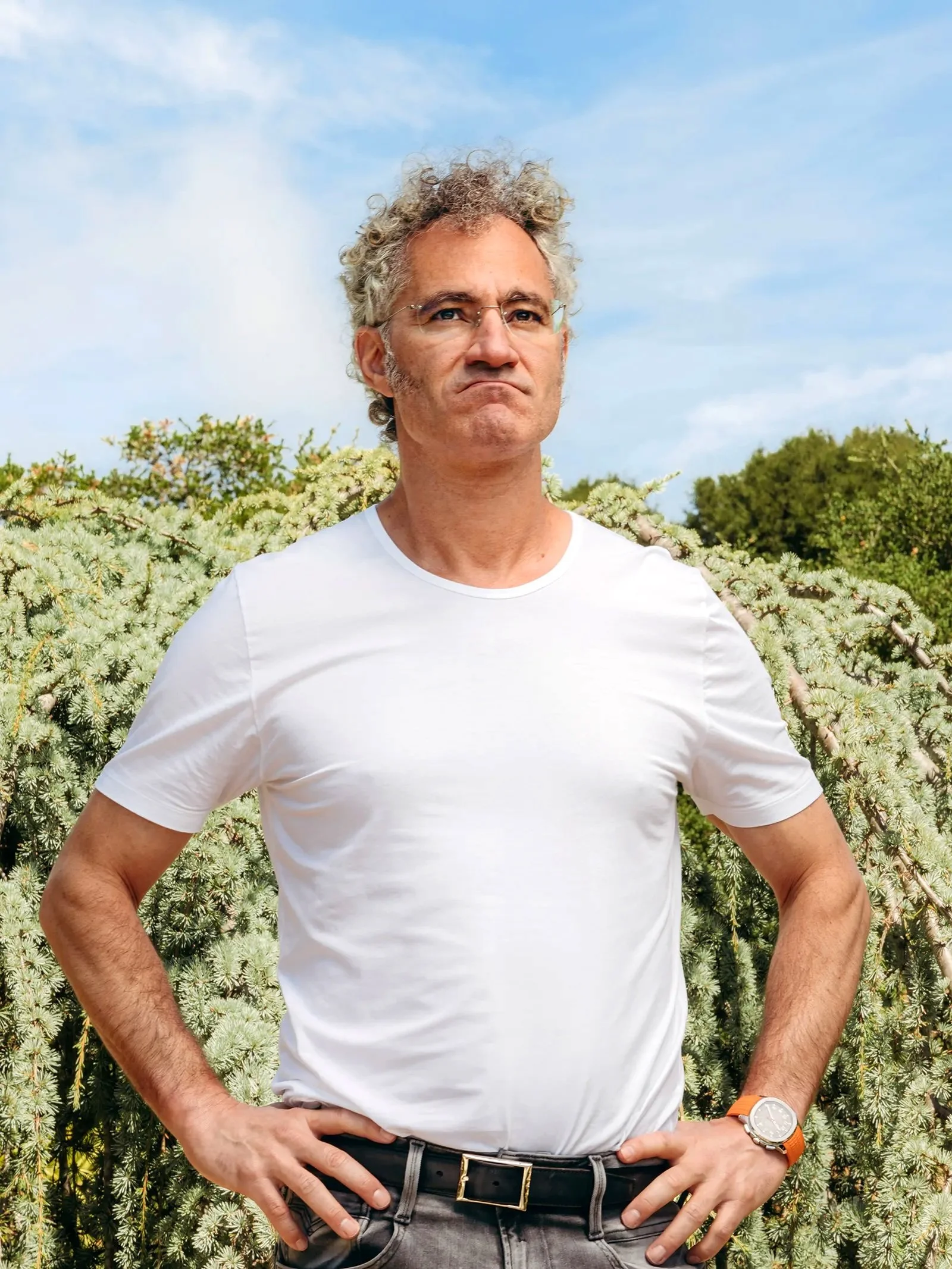
Alex Karp goes to war
This is where the manifesto's real danger lies. Karp and Zamiska frame their argument as a defence of Western democracy against complacency. But strip away the patriotic language and what remains is a pitch for a fusion of state power and private software, in which the line between elected government and unelected engineering elites grows deliberately blurry. A handful of companies — Palantir, Anduril, SpaceX, OpenAI, and the venture funds that bind them together — increasingly hold the operating systems for war, immigration enforcement, communications infrastructure and now frontier AI. Concentrate enough of that capability in enough hands, and you no longer need a coup to reshape a society's institutions. You simply need contracts, procurement cycles and the quiet, procedural transfer of state functions onto privately owned platforms. That is the technocracy risk in plain terms: not a dramatic seizure of power, but an administrative one, arriving through invoices rather than uprisings.
But the more interesting question — and the one Karp and Zamiska's manifesto conveniently avoids — is whether Palantir and its allied companies are truly the authors of this order, or merely its most visible instruments. Look closely at the money and the politics threading through this network. JD Vance, once a venture investor with a stake in Anduril, is now Vice President of the United States. Thiel has bankrolled Republican campaigns for nearly a decade. Palantir's founding capital traces back to America's intelligence apparatus. Every major contract these companies win comes not from Silicon Valley boardrooms but from Pentagon budgets, congressional appropriations, and executive branch priorities set by people never mentioned in a single one of the 22 points.
Seen this way, the manifesto's swagger looks less like the confidence of a company setting the agenda, and more like a company auditioning for a role it hopes will be permanent — a contractor dressed as a philosopher-king, angling to be indispensable to whichever administration holds the purse strings next. The "five global players" framing that circulates in commentary on this topic is seductive because it offers a clean villain. The messier truth is a layered structure: state intelligence and defence budgets at the base, elected officials and their donor networks in the middle, and companies like Palantir performing the role of visible technocrat on top — useful precisely because they can be blamed, replaced or quietly folded into the next contractor consortium if political winds shift.
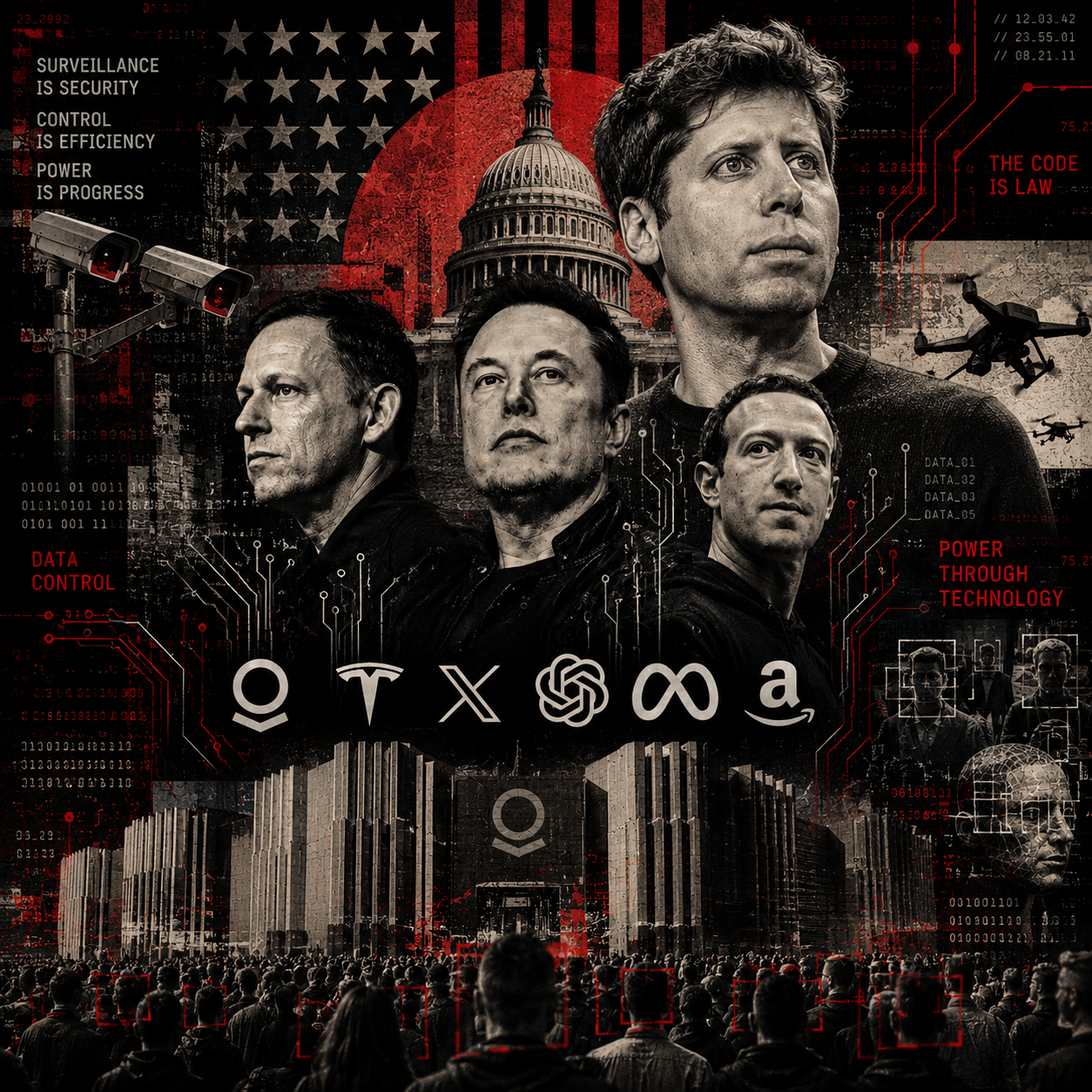
None of this makes the manifesto's ambitions less troubling. A company that supplies the targeting software for wars and the deportation software for borders does not need to hold elected office to shape the character of a society. But readers should be wary of any narrative — including Palantir's own — that casts a handful of tech founders as the sole architects of the future. The more uncomfortable possibility is that Karp, Thiel and their consortium are not the puppet masters at all. Still, extremely well-paid puppets, performing hard power on behalf of a state apparatus that has always known exactly what it wanted, and has simply found, in Silicon Valley's engineers, its most efficient contractor yet.
What are they preparing for?
Another detail is worth placing alongside Silicon Valley's growing appetite for hard power: some of the people closest to the technologies reshaping society have also spent years preparing for the possibility that society might not hold together.
Peter Thiel, Palantir's co-founder, has long regarded New Zealand as a potential refuge. He was granted citizenship in 2011 after spending just 12 days in the country, then bought a 477-acre estate at Lake Wānaka and later proposed an extraordinary grass-roofed, partly subterranean lodge complex on the site, sleeping up to 24 guests. Local planners rejected the development in 2022, citing damage to the landscape, and an appeal to the Environment Court subsequently failed. Thiel has since shown signs of losing interest in the project — reportedly moving to deregister the New Zealand company that held it — but his fascination with the country as a bolthole is well documented across nearly fifteen years of reporting.
Then there is Sam Altman. In a 2016 New Yorker profile, years before becoming the face of the generative AI revolution, Altman spoke openly about preparing for catastrophe, listing "guns, gold, potassium iodide, antibiotics, batteries, water, gas masks from the Israeli Defence Force, and a big patch of land in Big Sur I can fly to." In the same profile, he described a standing arrangement with Thiel: if the world faced a sufficiently serious breakdown, the two would get on a private jet and head for Thiel's property in New Zealand. It is a decade-old anecdote rather than a confirmed live plan, but it has been widely re-reported as AI's existential-risk conversation has moved from the fringe to the boardroom.
They are not alone. Mark Zuckerberg's Hawaiian compound on Kauai, reported to run north of $270 million, includes an underground shelter of roughly 5,000 square feet. Reddit's Steve Huffman has spoken of stockpiling guns, ammunition and motorcycles. Disaster preparedness has become common enough among Silicon Valley's ultra-wealthy to support an entire boutique bunker industry, with providers reporting spikes in orders whenever geopolitical tension rises.
None of this proves that technology's elite possess some secret knowledge about what is coming. The exceptionally wealthy can insure themselves against remote risks in ways ordinary people cannot, and hedging against catastrophe is not, on its own, evidence of anything sinister.
But in the context of Palantir's manifesto, the question becomes harder to ignore. Thiel helped build the company supplying software to intelligence agencies and militaries. Altman leads one of the companies pushing artificial intelligence toward increasingly capable systems. Zuckerberg controls communications platforms used by billions. These are people with an unusually privileged view of where technology is heading — and, at the same time, some of the most well-resourced exit plans from the society that technology is supposedly improving.
Do they know something the rest of us don't? No evidence suggests they do. The more unsettling possibility is that they see the same risks everyone else can see — geopolitical conflict, artificial intelligence, pandemics, infrastructure failure, social instability — and have the money to act on them. Either way, something is hard to dismiss about members of the technological elite simultaneously building the machinery of tomorrow and buying insurance against tomorrow going badly wrong.
An old warning, dusted off

Behold a Pale Horse, William Cooper
Long before Karp and Zamiska put "hard power" in a corporate slide deck, a different, far stranger book made a similar argument in far cruder form. Milton William Cooper's Behold a Pale Horse, first published in 1991 and reissued in an expanded 1996 edition, is not a work of political theory in any conventional sense. Cooper, a former U.S. Naval Intelligence briefing officer, built his book around claims of a secret Majestic-12 committee, extraterrestrial crash retrievals, and a hidden hand behind the JFK assassination — claims that mainstream historians and intelligence researchers have long treated as unsubstantiated. It belongs, by any fair accounting, in the conspiracy-theory shelf, not the foreign-policy one.
And yet the book has had a strange afterlife, cited everywhere from 1990s hip-hop lyrics to prison reading lists to modern online communities that argue a "New World Order" is being assembled in plain sight. Strip away the UFOs, and the Kennedy material, and what remains of Cooper's core thesis is a warning that centralised financial systems, emergency powers and secretive elite networks would gradually be used to move populations toward a single, tightly managed global structure — engineered less through visible force than through bureaucratic and technological consolidation.
It is worth being precise about what that cross-reference can and cannot support. Cooper's specific claims — the alien treaties, the Rockefeller-led Illuminati cell steering MJ-12 — have no credible evidentiary basis, and nothing in Palantir's very real government contracts lends them any. But the structural anxiety underneath Cooper's book — that control concentrates quietly, through institutions and systems rather than coups, and that the public is generally the last to notice — is exactly the terrain Karp and Zamiska's manifesto now occupies, just from the opposite side of the argument. Where Cooper wrote as a man convinced a hidden order was already assembling itself against ordinary citizens, Karp writes as a CEO openly campaigning for his company to be part of assembling one, dressed in the language of Western civilisational defence rather than shadowy cabal.
Cross-referencing the two thirty-five years apart is less about validating Cooper's specific mythology and more about noticing the shape of the argument has not changed much: a small number of actors, operating at the intersection of intelligence, capital and technology, positioning themselves as indispensable to the maintenance of order. In 1991, that fear lived on the fringe, dismissed as paranoia.
In 2026, a version of it was posted from a $300 billion company's own X account, celebrated rather than hidden — which may be the more useful data point of all. What was once alleged in whispers is now stated, unprompted, as a mission statement. Whether that represents vindication of Cooper's underlying anxiety about concentrated power, or simply the normalisation of language that would once have sounded conspiratorial, is a judgment MONEY leaves with the reader — but it is no longer a question serious people can dismiss without reading the manifesto first.










As AI optimises more of our lives, Adrian Galea argues that lived experience, taste, judgement and human connection could become our most valuable competitive advantages.