

The competitive advantage of disagreement: why the intelligent enterprise needs intelligent dissent

As artificial intelligence becomes increasingly capable of generating answers, Manuel Delia argues that the real competitive advantage will lie elsewhere. The organisations that thrive won't simply adopt better AI, but build cultures where assumptions are challenged, dissent is encouraged, and human judgement remains the final authority.
Every new technology brings a familiar question: which jobs will it replace? Artificial intelligence is no exception. Will it replace writers, lawyers, accountants, software developers, customer service teams—or even managers?
The more interesting question is not what AI replaces, but what it changes.
For generations, organisations have relied on people to find answers. Increasingly, they will rely on people to decide whether the answers generated by machines are trustworthy. That is a fundamentally different task, requiring different skills and, perhaps more importantly, different institutions.
Much of the public conversation about AI has focused on hallucinations: the tendency of large language models to produce information that is convincing yet incorrect. Businesses are right to worry about this risk. Yet there is another, potentially more dangerous, form of hallucination that receives far less attention: management hallucination.
Management hallucination occurs when leaders mistake confidence for correctness and probability for certainty. Presented with articulate, well-structured analyses generated in seconds, executives may begin to treat AI outputs as objective truth rather than as informed hypotheses. The technology has not become infallible. Our perception of it has. This is not a technical failure. It is a governance failure.
The intelligent enterprise will not distinguish itself by deploying the most sophisticated AI tools. Those tools will quickly become available to everyone. Its advantage will lie in its ability to question them without rejecting them, to integrate them without becoming dependent on them, and to preserve human judgement precisely when machine intelligence appears most persuasive. That requires a different understanding of intelligence.
We often imagine intelligence as residing either in exceptional individuals or in increasingly capable machines. Yet organisations rarely succeed because they employ the smartest people or the most advanced technology. They succeed because they create environments where ideas collide, assumptions are challenged, and better judgements emerge from conversation.
Collective intelligence is not the sum of individual intelligence. It is the product of constructive disagreement.
Democratic societies have understood this for centuries. Their resilience does not stem from unanimity but from institutionalising disagreement. Parliaments, courts, independent media and public consultation exist because decisions improve when they are scrutinised. The point of disagreement is not obstruction. It is learning.
Businesses are not democracies, nor should they be. Yet they face the same challenge: making sound decisions amid uncertainty. They, too, need mechanisms that expose weak assumptions before markets, regulators or customers do.
For years, corporate culture has often rewarded alignment. Managers have sought consensus, speed and decisive execution. AI will make those qualities easier than ever to achieve. Ask the same question of the same model across an organisation, and remarkably similar answers will emerge.
That may feel like consensus. It may even look like intelligence. It is neither. Artificial intelligence is, by design, an engine of convergence. It predicts the most plausible answer by drawing on patterns in existing knowledge. The danger is not necessarily that the answer is wrong. The danger is that everyone receives versions of the same answer, sees the same patterns, and begins reasoning from the same assumptions.
The result is a subtle standardisation of thought, a gentrification of ideas. Perspectives become more polished, coherent and predictable, but also less diverse. The rough edges where innovation often begins are gradually smoothed away. Organisations risk becoming intellectually comfortable, losing their capacity for surprise.
History suggests that institutions rarely fail because one person makes a mistake. They fail because everyone makes the same mistake.
The Space Shuttle Challenger explosion is remembered as an engineering disaster. In truth, it was a management failure. Engineers had raised concerns about the O-rings in unusually cold temperatures, yet organisational pressure to maintain schedules and preserve confidence prevailed. A lack of knowledge did not cause the catastrophe. It was caused by the organisation's inability to give sufficient weight to dissenting voices. The lesson remains as relevant in the age of AI as it was in 1986.
The greatest value of disagreement is therefore not that it predicts the future. It is that it enables organisations to imagine futures the prevailing consensus has overlooked. A colleague who asks, "What if we're wrong?" performs one of the most valuable tasks in any enterprise. They are not slowing progress. They are expanding the range of possibilities under consideration.
This is where conversation becomes a strategic asset. For years, managers have questioned the value of informal interaction. Why gather people in meeting rooms or encourage conversations around the coffee machine when digital tools can exchange information more efficiently?
The AI era offers an unexpected answer. Routine information is becoming abundant. Reflection is becoming scarce. Machines can summarise reports, analyse data and draft presentations in moments. What they cannot replicate is the spontaneous exchange in which one person's experience collides with another's intuition. "This reminds me of a customer we lost three years ago." "Something doesn't feel right." "Have we considered looking at it from the regulator's perspective?" These are not merely pieces of information. They are acts of collective reasoning.
Indeed, the more our tools converge on the same answers, the more our organisations must invest in people who ask different questions.
Innovation rarely begins with the statistically most likely answer. It begins with someone wondering whether everyone else has been asking the wrong question. As artificial intelligence becomes better at generating answers, human conversation becomes more valuable, not less so.
The intelligent enterprise should therefore invest not only in technology but also in the institutions that safeguard independent judgement: cross-functional reviews that bring together diverse perspectives; "red teams" tasked with challenging strategic assumptions; post-project reviews that reward candour rather than assigning blame; leaders who are willing to say, "Convince me I'm wrong"; and governance processes that require important AI-assisted decisions to be explained, debated and owned by identifiable human decision-makers.
Accountability cannot be outsourced. No board will ultimately be able to justify a failed decision by saying, "The AI recommended it." Responsibility remains irreducibly human. Perhaps this is the greatest irony of the AI revolution.
The Industrial Revolution rewarded standardisation. Machines performed best when humans adapted themselves to predictable processes. Artificial intelligence may reverse that logic. As machines become increasingly proficient at standardised reasoning, the qualities that create lasting competitive advantage become those that resist standardisation: curiosity, judgement, imagination, humility and the courage to disagree.
Artificial intelligence excels at convergence. Human intelligence excels at divergence. The intelligent enterprise of the future will need both. But if it has to choose where to invest its distinctive energy, it should remember that anyone can buy AI. A culture that encourages thoughtful disagreement, rewards conversation and transforms dissent into better judgement cannot.
That may prove to be the most valuable technology any organisation has ever developed.







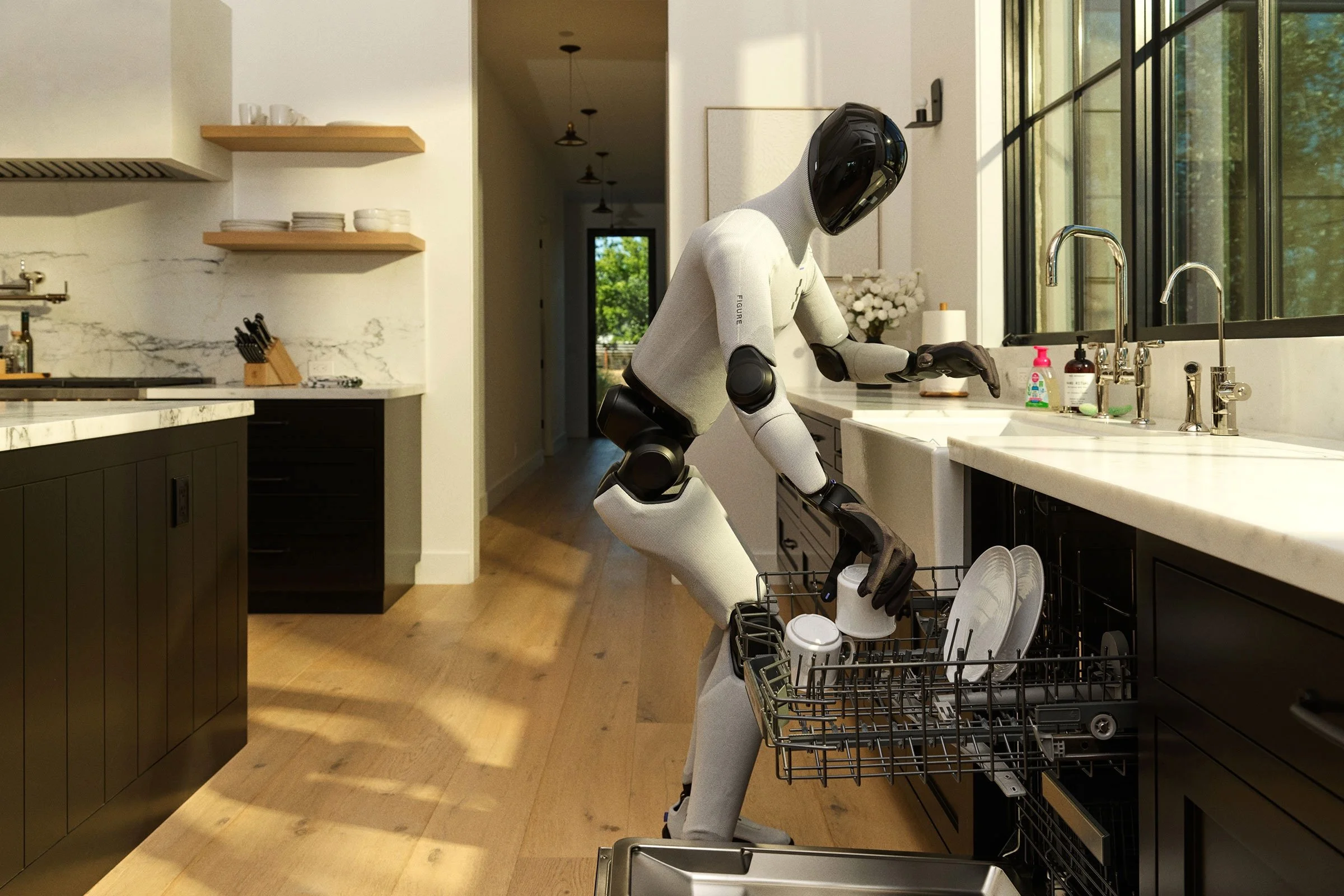





As AI optimises more of our lives, Adrian Galea argues that lived experience, taste, judgement and human connection could become our most valuable competitive advantages.