

Is Malta really losing homeowners?
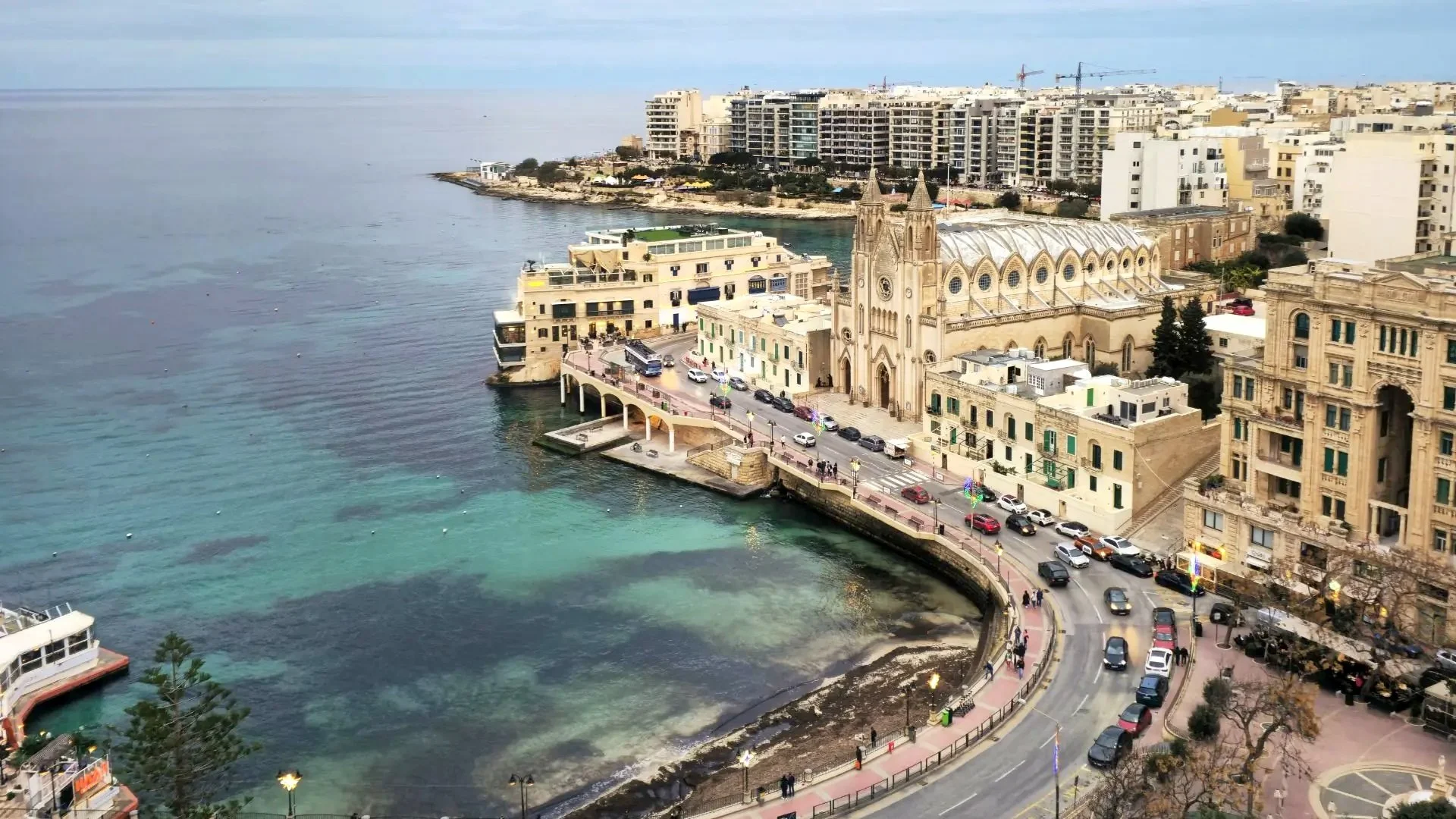
Recent Eurostat data suggests Malta has experienced one of Europe's steepest declines in homeownership. Yet, as MONEY discovered, the headline tells only part of the story. Behind the numbers lies a complex mix of migration, affordability, demographics and changing housing realities.
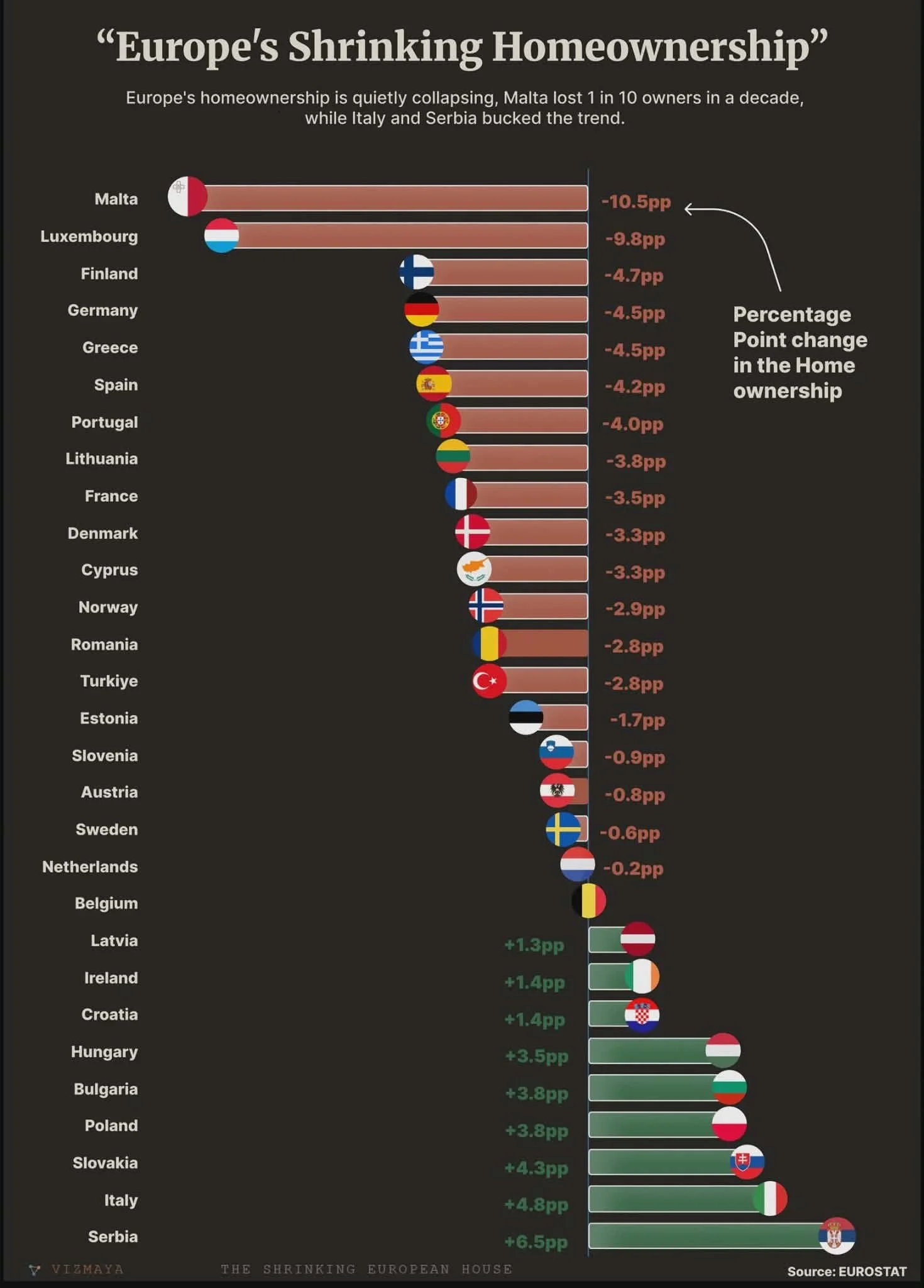
A recent Eurostat chart generated plenty of discussion in Malta's property circles for one simple reason: it placed Malta among the European countries experiencing the sharpest declines in homeownership over the past decade.
According to the data, Malta's homeownership rate fell by 10.5 percentage points during the period under review. On the surface, the conclusion appears straightforward. Malta is becoming a nation of renters.
Yet the reality behind the figures may be considerably more complex.
While rising property prices and affordability concerns have undoubtedly made it harder for some people to enter the market, Malta's falling ownership rate may say as much about who has moved into the country as it does about who can no longer afford to buy.
The question is not simply whether Malta has fewer homeowners. The more important question is whether Maltese households are losing access to ownership, or whether Malta's rapidly changing demographics are reshaping the statistics.
A nation built on ownership
Homeownership has long occupied a special place in Maltese society.
For generations, buying property represented more than acquiring a roof over one's head. It was security, stability and often a family's largest financial asset. Property ownership became intertwined with social mobility, wealth creation and intergenerational planning.
Unlike some Northern European countries, where renting is common and socially accepted, Malta traditionally viewed ownership as the natural destination. Renting was often seen as a temporary stage before purchasing a permanent home.
That culture helped Malta maintain one of Europe's highest ownership rates for decades, which is precisely why the Eurostat figures attracted so much attention.
The missing context
Before sounding the alarm, however, it is worth understanding what the statistics actually measure. The Eurostat figures are based on residents, not necessarily Maltese citizens or Maltese households.
That distinction matters.
Over the past decade, Malta has experienced one of the fastest population increases in Europe, driven largely by foreign workers and international residents. Many of these individuals rent rather than buy, either because they are in Malta temporarily, have not yet established long-term roots, or simply prefer the flexibility that renting provides.
As a result, the ownership rate can fall even if the number of homeowners continues to rise.
National Statistics Office data highlights this important distinction. While overall homeownership stood at 65.9% of all households in 2025, ownership among Maltese households remained significantly higher at 84.6%.
The gap is striking.
It suggests that Malta's falling ownership rate may not necessarily indicate that Maltese families are abandoning ownership. Rather, it may reflect the reality that Malta today has far more residents who naturally form part of the rental market. That does not invalidate the Eurostat figures. It simply means they require context.
More residents, more renters
The growth of Malta's rental sector has been dramatic. In just a few years, renting has moved from a relatively small segment of the housing market to a far larger component of the overall picture.
This shift broadly mirrors Malta's changing demographic profile. Foreign workers have become an important part of the economy, supporting sectors ranging from hospitality and construction to financial services, healthcare and technology. Many arrive without the intention of purchasing property immediately, if at all.
The consequence is straightforward. As the number of renters increases faster than the number of homeowners, overall ownership rates decline.
This can create the impression that homeownership itself is collapsing, when in reality the population is changing.
For a country that has experienced exceptional population growth over a relatively short period, this distinction is critical.
Affordability still matters
Demographics may account for part of the decline, but they do not account for all of it. Property affordability remains one of the most significant challenges facing younger generations.
House prices have increased substantially over the past decade, fuelled by strong economic growth, investor demand, population expansion and Malta's finite land supply. While wages have also risen, particularly in higher-value sectors, they have often struggled to keep pace with housing costs.
For many first-time buyers, the challenge is no longer obtaining mortgage approval. It is accumulating the deposit and associated costs required to enter the market.
The result is that ownership is increasingly delayed. Many buyers are purchasing later in life than previous generations. Others remain in the rental market for longer periods while attempting to save. Single-income households face particular difficulties, especially in localities where property values have risen sharply.
This suggests that while Malta may not be losing homeowners as rapidly as the headline statistic implies, accessibility to ownership is nevertheless becoming more challenging.
The emerging wealth divide
The wider implications extend beyond housing itself. Homeownership has historically been one of the most effective ways to accumulate wealth in Malta. Rising property values have helped countless families build financial security, often creating assets that can be passed from one generation to the next.
Those who enter the market benefit from that growth. Those who remain outside it do not.
Over time, this creates the potential for a widening divide between asset owners and long-term renters. Existing homeowners continue to accumulate wealth through property appreciation, while non-owners face the prospect of paying increasing housing costs without building equity.
For economists and policymakers, this is perhaps the most important issue raised by the ownership debate.
The concern is not simply whether people own homes. It is whether future generations will have the same opportunities to build wealth that previous generations enjoyed.
Ownership or housing security?
The discussion also raises a broader question. Should Malta's objective be to maintain high ownership rates, or to ensure high-quality, secure housing regardless of tenure?
Many European countries operate successful housing systems with lower ownership rates and stronger rental protections. Long-term renting is not necessarily a sign of failure if tenants enjoy stability, affordability and legal certainty.
Malta's challenge may therefore be twofold. On one hand, policymakers must ensure that ownership remains realistically attainable for those who aspire to it. On the other hand, they must continue improving the rental sector for an increasingly diverse, mobile, and international population.
The two goals are not mutually exclusive. In fact, they may become increasingly interconnected.
Looking beyond the headline
The Eurostat graph tells an important story, but not necessarily the complete one.
Malta's falling ownership rate appears to be driven by two powerful forces operating simultaneously. The first is demographic change, as a rapidly growing population introduces more renters into the market. The second is affordability pressure, which is making ownership more difficult for some aspiring buyers.
The challenge for policymakers is understanding which force matters most. Because if Maltese households continue to access ownership at historically high levels, the headline is less alarming than it first appears. If that access is genuinely eroding, however, Malta faces a much deeper challenge than declining percentages on a chart.
The question is no longer how many homes are being built.
It is whether the next generation can still realistically aspire to own one.
And if the answer to that question becomes increasingly uncertain, then Malta's housing debate must move beyond construction volumes and property prices. It must focus on preserving something that has long been central to the country's social fabric: the belief that hard work and financial discipline can still lead to owning a home.


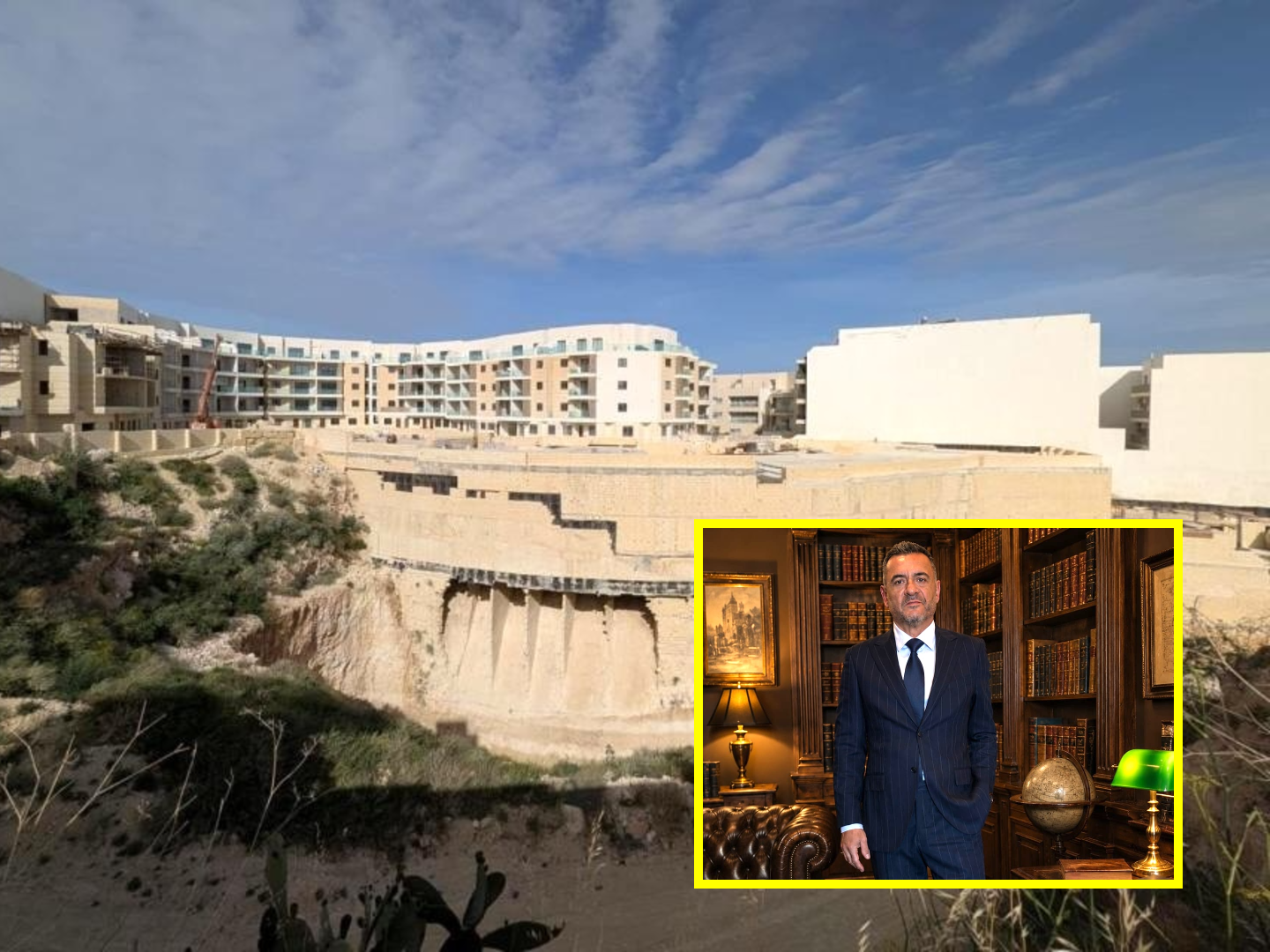






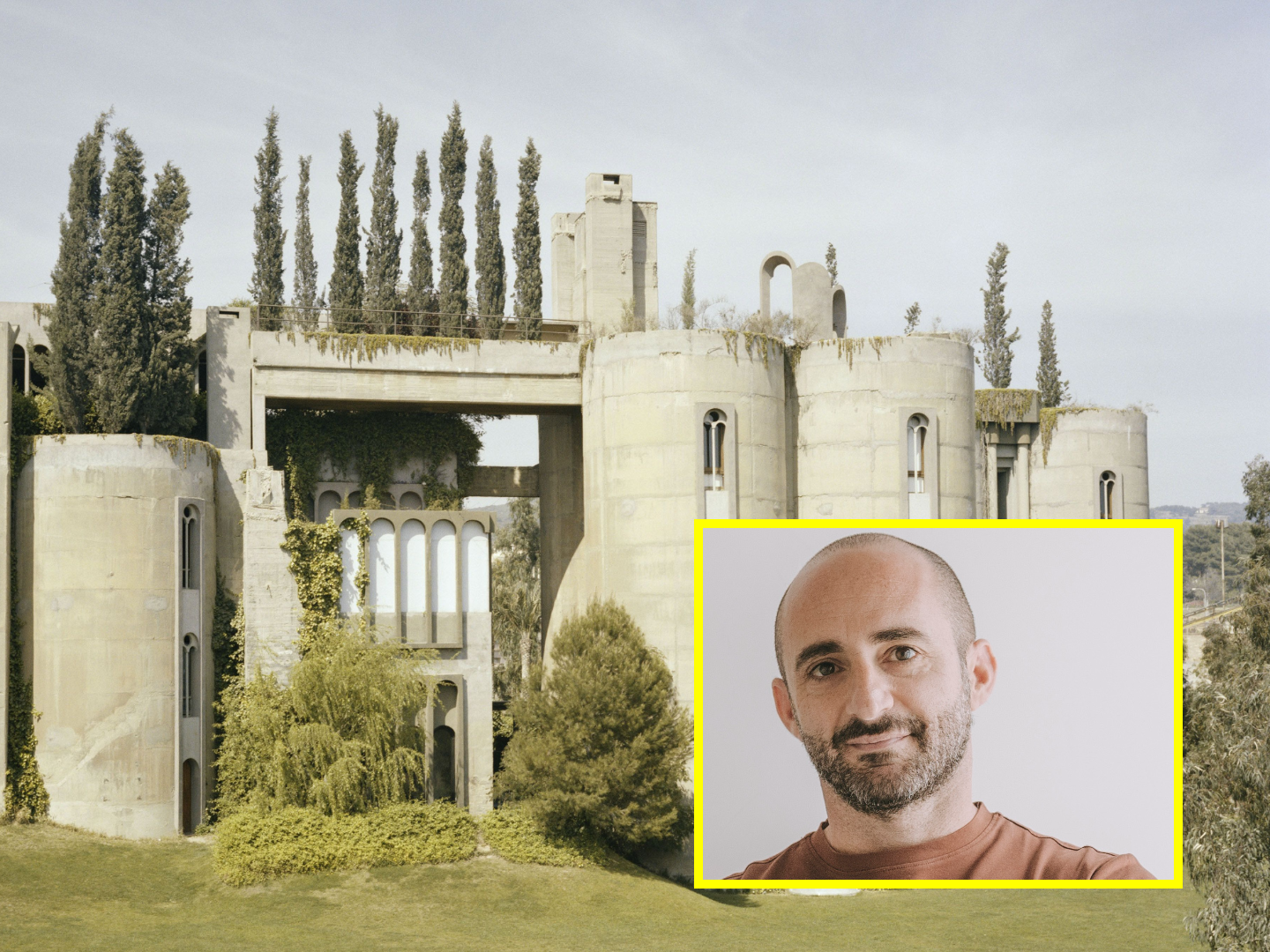



As Malta's property market matures, Zanzi's Steve and Michael Mercieca discuss technology, trust, governance and why the next decade will favour disciplined operators over growth-at-all-costs ambition.