

Signed, Sealed, Regretted: 10 office leasing mistakes businesses should avoid

Commercial real estate advisor Etienne Licari and real estate valuer Justin Mizzi draw on years of experience to reveal the costly mistakes businesses make when renting office space in Malta – and how to avoid them.
Renting an office in Malta looks straightforward: pick an area, scan listings, compare rents, sign. In practice, an office lease is a multi-year commercial commitment that shapes how a business operates every day – and the wrong call can quietly drain cash flow, limit growth, and trap a company in space that no longer fits.
Drawing on years of experience advising occupiers, investors and business owners across Malta's commercial property market, we continue to see the same mistakes recur. Here are the ten that cost businesses the most.
1. Starting without a clear brief and a structured process
Most office mistakes are not made on the day a lease is signed; they are made weeks earlier, when the search begins without a proper brief. Companies start by asking what is available rather than what they actually need, and the resulting shortlist is shaped by the market rather than by the business.
A useful brief is the product of real internal consensus – between brand and vision, between C-suite, HR, operations, branding, and the people who will actually use the space – and a conversation with external professionals before, not after, the first viewing. It should set out current and projected headcount, workstation and meeting room needs, storage, parking, the target location, the budget, and the required flexibility.
"Treat the office decision as a structured process, not a transaction. If the brief is weak, the shortlist will be weak, and so will the lease."
2. Comparing offices on rent per square metre alone
Headline rent is the most visible number, and often the most misleading. A "cheaper" headline rent can look attractive; however, it does not show you the full picture. Leases often include common area maintenance (CAM) charges or require significant works, such as new partitions, security and safety systems, furniture, cabling, and HVAC, to make the space usable. A more expensive office may already be finished, furnished and properly serviced. It is vital to compare the total cost of occupation over the lease term.
Cash-flow matters too. A high deposit, or the way rent is paid (monthly, quarterly, or annually in advance or arrears), changes how much working capital a tenant must commit upfront – and landlords view weak or irregular cash flows as unattractive, which affects both the terms offered and access to the best stock.
The right question is not "Which office is cheapest?" but "Which office gives the best commercial outcome for the total cost?"
3. Underestimating fit-out time
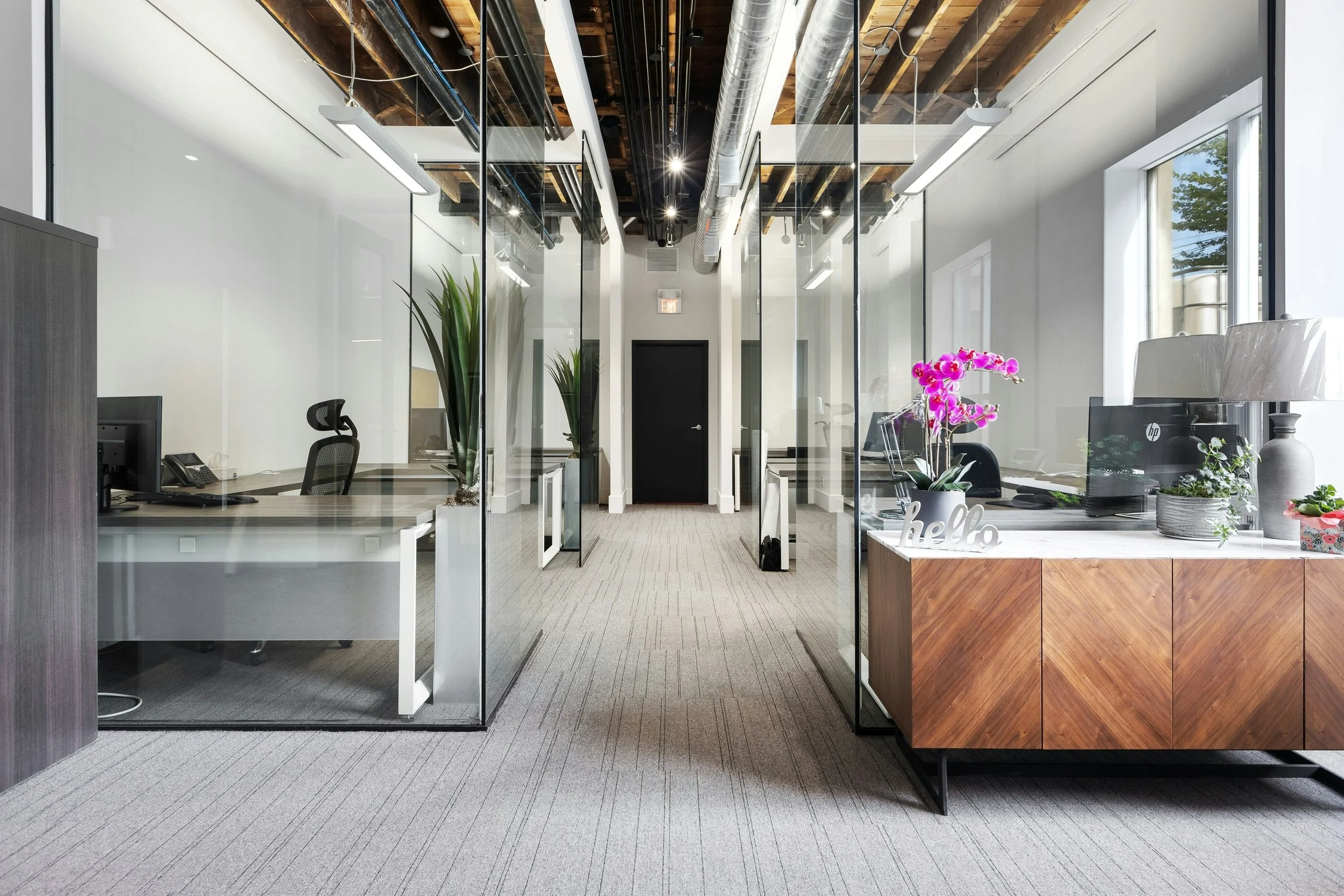
Fit-out is the most underestimated part of an office move. Partitioning, lighting, air-conditioning, cabling, furniture, meeting rooms and compliance items all add cost – and procurement lead times, especially for imported items, add weeks or months to the programme.
Before signing, clarify the handover state of the office – whether it is fully finished, shell and core, or somewhere in between – what services are already in place, what works are needed and who is responsible for them. Then agree, in writing, who owns what at lease end: fixed improvements (partitions, joinery), fitted items (kitchens, AC units) and movable furniture are treated differently, and reinstatement obligations can be costly.
Finally, remember that finishes, services and furniture do not last forever. Even good-quality products typically have a useful life of 15 to 25 years. Budgeting only for the initial fit-out understates the true cost of occupation.
4. Getting the size wrong
Too much space is expensive: every extra square metre adds to rent, service charges, utilities, fit-out, and maintenance costs, and in strong Maltese locations, that premium compounds quickly.
Too little space is disruptive: meeting rooms are overused, storage disappears, desks are squeezed in, and the business is forced back into the market before the lease expires.
The fix is a proper space – and growth – assessment, not a desk count. Ask how many people will actually use the office daily, whether every role needs a permanent desk, whether growth expectations are firm or speculative, and whether expansion space can be negotiated into the lease.
A smaller, well-planned office often outperforms a larger, inefficient one – but only when the planning is honest.
5. Treating parking as a secondary issue
In Malta, parking shapes staff satisfaction, punctuality, client access and whether a location is practical at all. It deserves attention early, not after the office has been chosen.
In Malta's compact geography, even relatively short relocations can significantly affect commuting times, parking availability and staff satisfaction.
Look at private and public parking together. Private bays – within the building or rented nearby – offer certainty at a cost. Public parking, on-street or in car parks, supplements that capacity but is rarely guaranteed, and is shifting as residential parking schemes and new developments alter what is realistically available.
An office that is attractive, well-priced and well-located can still fail daily if access creates friction – a particular trap for businesses relocating from overseas, who underestimate how Maltese traffic transforms short distances.
6. Choosing location for prestige rather than fit
A prestigious address can matter, but it should not override operational logic. Sliema, St Julian's, Gżira, Ta' Xbiex, and Valletta make sense when client access, team access, image, and amenities are central. Other areas such as Marsa, Żebbuġ, Qormi, Mrieħel, Birkirkara, Santa Venera, San Ġwann and Mosta often work better when team access, improved value, floorplate size and island-wide accessibility matter more.
The best location depends on where employees live, how often clients visit, whether visibility matters, parking needs, transport access and budget.
It is also worth checking what is planned for the area around the building. A well-positioned office can become considerably less attractive if a major construction project is about to begin nearby. Permit checks and a short conversation with neighbouring occupiers reveal risks that no viewing will.
7. Committing for too long, or too short
A long traditional lease offers stability, control and the lowest cost per square metre over time, but it punishes companies whose circumstances change. Flexible workspace – serviced, managed and co-working – solves that for start-ups, small teams, project teams, overseas companies entering Malta, and businesses still finalising plans. But staying in a flexible space for too long can end up costing more than a conventional lease.
Co-working suits very small teams or individual professionals who value collaboration without a private office. Managed offices sit between co-working and a traditional lease – tailored, branded space without the operational burden.
The right model depends on timing, cash flow, team size, and the certainty of certain plans. The decision should be deliberate, not automatic.
8. Searching without specialist market advice
Listings do not tell the full story. They cannot show how negotiable rent is, how a landlord behaves in practice, what lease terms are realistic in the current market, or what stock is about to come to market off-market.
Experienced commercial advisors can help occupiers understand market norms, compare total occupancy costs, identify practical risks, and negotiate more effectively – particularly valuable for foreign companies, growing teams, businesses operating under tight deadlines, and tenants evaluating multiple locations.
The cost of advice is modest. The cost of taking the wrong space – or paying more than necessary for the right one – rarely is.
9. Skipping proper due diligence
Even when the property looks right, and the commercial terms feel acceptable, signing without proper due diligence is one of the most expensive mistakes a tenant can make.
Two professionals are central: the architect (often supported by engineers), who protects the tenant on physical and regulatory matters, and the lawyer, who helps ensure that the lease properly reflects and protects the interests of the parties involved.
Due diligence should cover the condition of the building and its services, an inventory of what is included, a life-cycle view of major elements, permits and planning compliance, accurate measurement of lettable area, EPCs and running costs, health and safety, CRPD accessibility, common area maintenance (CAM) charges and how they are calculated, and verification of the landlord's title and authority to let.
Lease terms – duration, renewals, breaks, rent reviews, deposits, guarantees, restrictions, maintenance, permitted use, assignment, reinstatement and notice – each carry real commercial consequences and deserve close legal scrutiny.
The cost of doing this properly is modest in the context of a multi-year lease. The cost of skipping it rarely is.
10. Starting the search too late
Timing is the silent killer. Wait too long, and the search runs under pressure: options shrink, leverage disappears, due diligence and negotiations are rushed.
Start too early, and landlords will not engage – a landlord with available space does not earn rent on empty months. He will rarely hold a property for a tenant who wants to occupy six months later, particularly on a shorter lease. Most either decline the deal or insist that rent starts within a month or two of signing.
The right window depends on size and fit-out. A small team moving into a ready-to-occupy office can run the whole process – search, negotiation and agreement – in one to three months. A business taking 500+ m² with a custom fit-out often needs up to 6 months, as finishes, services, and furniture design and procurement cannot be rushed.
The sweet spot is the latest point at which a tenant still has choice and leverage, with enough runway for due diligence and fit-out.
"Time is the cheapest negotiating tool a tenant has. Spend it before the lease expires, not after."
A better way to rent an office in Malta
An office is not just an expense. It is a long-term financial commitment that not only shapes a business's attractiveness and brand but also its day-to-day operations. Chosen well, it supports stability, efficiency and growth. Chosen poorly, it becomes an expensive constraint that is difficult to undo.
The best office decisions are the result of a clear brief, realistic expectations, thorough research, professional due diligence and unhurried negotiation – in that order.
In a market where businesses compete for talent, efficiency and long-term resilience, office decisions deserve the same strategic attention as any other major investment.
Etienne is a Commercial Real Estate Advisor at AGILE Commercial Real Estate, advising occupiers and investors on office leasing in Malta. Justin is a Partner and Real Estate Valuer at QP, specialising in commercial property valuation and investment advisory.















As Malta's property market matures, Zanzi's Steve and Michael Mercieca discuss technology, trust, governance and why the next decade will favour disciplined operators over growth-at-all-costs ambition.